
Verify Before You Book: 3 Questions for U.S. Brewery Hot Tub Hotels
Yes, you can find U.S. hotels with private in-room jacuzzis, and plenty of them. The catch is that a lot of listings blur the line between a shared spa tub and a real private soak. Use a verified-listing source like Hotel Hot Tubs, check the room-level notes or verification badge, and confirm with the property directly before you pay for a room that turns out to have nothing but a generic amenity list.
TL;DR:
- Verify that the listing explicitly states that the hot tub is located inside the room and confirmed by guest photos or inspection standards.
- Expect verified private hot tubs to be labeled as “whirlpool suite,” “in-room jacuzzi,” or “jetted tub in room,” not just property-wide amenities.
- Check arrival conditions by testing the jets, inspecting water clarity and odor, and photographing the tub before use to avoid disputes.
- Be aware that resort fees and local taxes typically add around $26 per night on average, so consider total costs rather than just the nightly rate.
- Confirm with the property directly that the tub is operational, private, and in the room before booking, especially for last-minute plans.
Table of Contents
- What Counts as a Private In-Room Hot Tub?
- How Do I Verify a Listing Before I Book?
- Is It Safe? CDC Guidance and What to Check on Arrival
- What Should I Know About Pricing and Fees?
- Your 60-Second Arrival Checklist
- What Are the Reservation and Cancellation Policies?
- What Amenities Come With a Brewery Stay?
- How Do I Judge Location and Proximity?
- What Does a Brewery Hot Tub Stay Actually Cost?
- How Do I Pick the Right Brewery Hot Tub Hotel?
- Why Verification Beats the Amenity List
- Book a Verified Private Jacuzzi Suite
- Sources
- FAQ
What Counts as a Private In-Room Hot Tub?
Hotel listings throw around “hot tub,” “jetted tub,” and “whirlpool” like they’re interchangeable. They’re not, and the difference decides whether you get privacy or a walk down the hallway in a robe.
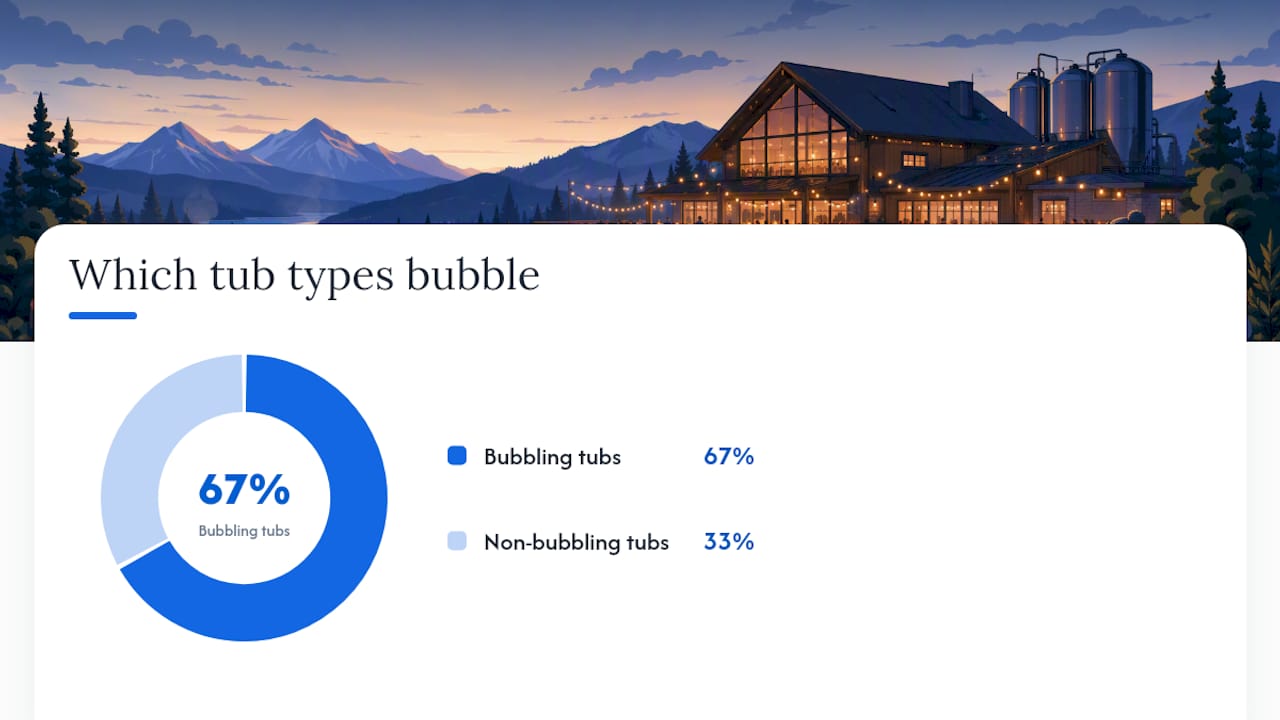
A soaking tub is a deep, often freestanding tub with no jets. It’s built for relaxing, not for the bubbling jacuzzi experience most couples are booking for. A jetted tub or whirlpool has water jets built into the tub itself, installed inside the guest room. A private hot tub typically refers to a standalone unit, sometimes on a balcony or patio, that’s exclusive to that room or suite. All three can be private. Only two of them actually bubble.
The bigger trap is property-level amenity lists. A hotel’s overall page might say “hot tub” because there’s one shared spa unit by the pool, even though the specific room you’re eyeing has nothing. AAA’s inspected-room listings solve this by naming the exact unit type, using phrasing like “one-bedroom suites with king beds and whirlpools” rather than a vague property blurb.
Look for these phrases when scanning a listing, since they tend to signal an actual in-room unit rather than a shared amenity:
- “Whirlpool suite” or “whirlpool unit”
- “In-room jacuzzi” or “private jacuzzi tub”
- “Jetted tub in room”
- “Book the whirlpool room” (a direct room-type designation, not a property feature)
- Room photos showing the tub inside the same space as the bed
If the listing only says “hot tub on-site” with no room-type language attached, assume it’s shared until you confirm otherwise.
How Do I Verify a Listing Before I Book?
Marketing photos lie by omission more than they lie outright. A wide-angle shot from a renovation three years ago doesn’t tell you whether that jetted tub still runs, or whether it’s even in the room you’re about to reserve.
Recent guest photos beat professional photography every time, because guests document what’s actually there, jets and all. A verification badge on a listing site matters for the same reason: it tells you someone checked the room-level claim instead of trusting the property’s own copy.
Before booking, call the property and ask three questions:
- Is the tub physically inside the room I’m booking, not in a shared spa area?
- Are the jets currently operational, or is it soaking-only right now?
- Is the tub exclusive to my room, or shared with an adjoining unit?
Hotel Hot Tubs verifies this exact detail before a listing goes live, cross-checking room descriptions against guest photos and, where available, AAA’s inspected-room notes.
Pro Tip: If a reservation agent hesitates on question one, ask for a timestamped photo texted or emailed to you. A property confident in its amenity will send one in under five minutes.
Is It Safe? CDC Guidance and What to Check on Arrival
A private tub isn’t automatically a clean tub. Warm, agitated water is exactly the environment where bacteria thrive, and jets make it worse by aerosolizing whatever’s floating in the water.
The CDC recommends hot tub water stay at or below 104°F, with chlorine at roughly 3 ppm or bromine between 4 and 8 ppm, and pH held between 7.0 and 7.8. Alcohol use during a soak and swallowing tub water both raise health risks, and children under five shouldn’t use hot tubs at all.
The bigger concern is Legionella. The CDC warns that warm water and jets create ideal conditions for the bacteria to grow and spread through mist, and Legionnaires’ disease is fatal in roughly 1 in 10 cases among people who contract it. Continuous water-management programs are now standard practice at well-run hotels for exactly this reason.
Check these on arrival, before you get in:
- Water clarity (cloudy water means poor filtration)
- Any chemical or musty odor
- Visible scale, deposits, or discoloration on the tub surface
- Jets cycling on and running clean, not sputtering or discolored
- Surrounding flooring and grout for standing water or mold
Anyone who is pregnant, immunocompromised, or managing a chronic respiratory condition should talk to a doctor before using a hotel hot tub, given the aerosol risk the CDC flags.
What Should I Know About Pricing and Fees?
The advertised nightly rate on a jacuzzi suite rarely tells the whole story. Resort fees, amenity fees, and cleaning surcharges get added at checkout, and they vary wildly by property and city.
Nationally, mandatory resort or amenity fees aren’t as common as travelers assume. The American Hotel & Lodging Association reports that only about 6% of hotels nationwide charge these mandatory fees, averaging around $26 per night where they do apply. That’s real money on a two-night stay, so check the total price before comparing properties on nightly rate alone.
A few habits protect your budget without sacrificing the room you actually want:
- Read the fee disclosure on the booking page, not just the headline rate
- Favor a verified private-tub listing over a slightly cheaper room with unconfirmed amenities
- Book midweek when possible, since jacuzzi suites often see weekend demand spikes
- Call the property directly for last-minute rate flexibility, since weekend booking strategies often apply just as well to hot tub suites as to standard rooms
A $15 savings on a room with an unverified tub isn’t a savings if you show up to find a soaking tub instead of jets.
Your 60-Second Arrival Checklist
Confirming the tub before you unpack takes less time than checking your phone.
- Photograph the tub the moment you walk in, before touching anything, in case you need to document a problem later.
- Turn the jets on and off to confirm they cycle properly.
- Smell the water for chemical or musty odors.
- Check the water temperature stays within a reasonable range, not scalding.
- Look at the flooring around the tub for cleanliness and standing water.
If anything looks off, don’t get in. Call the front desk, request a cleaning pass or a room change, and if the issue doesn’t resolve, contact whichever booking provider you used. Hotel Hot Tubs’ verification standards exist specifically so this scenario is rare, not routine.
Pro Tip: Keep those arrival photos on your phone until checkout. If a dispute comes up over the room’s condition, timestamped images settle it faster than a phone call.
What Are the Reservation and Cancellation Policies?
Private-tub rooms at brewery-adjacent hotels tend to book up faster than standard rooms, especially around weekend brewery events, tasting releases, or seasonal beer festivals. That demand shapes the cancellation terms you’ll see.
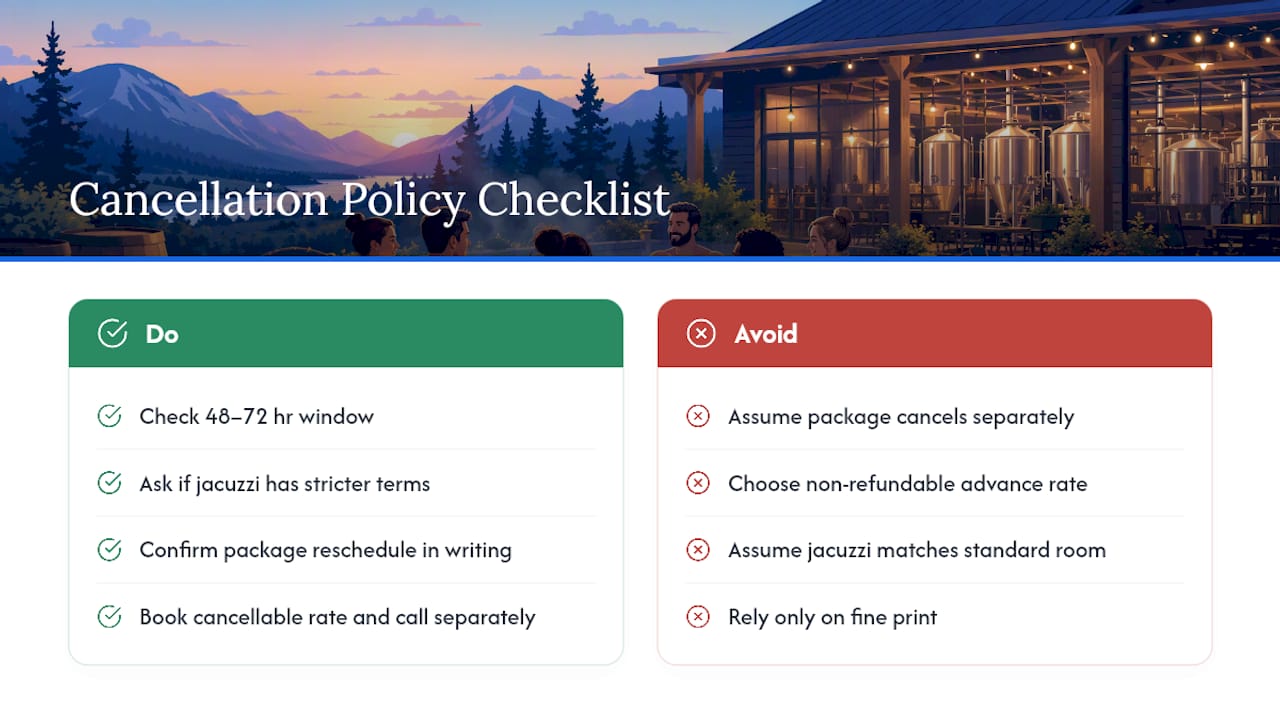
Many properties near popular brewery districts require a 48 to 72-hour cancellation window for standard rates, with stricter, non-refundable terms attached to discounted advance-purchase rates. If a brewery hotel package bundles a tasting flight or tour ticket with the room, expect the cancellation policy to cover the whole package, not just the lodging portion, since the brewery partner has its own scheduling constraints.
Always check whether the property’s specific jacuzzi suite has a different policy than its standard rooms. Higher-demand suites sometimes carry tighter cancellation windows precisely because they turn over fast. If you’re booking around a brewery’s release weekend or an anniversary date, confirm in writing what happens if the brewery portion of the package gets rescheduled by the venue rather than by you. That detail rarely shows up in the fine print until you ask.
For flexible plans, book the standard cancellable rate even if it costs a bit more, and call the property to ask about jacuzzi suite availability separately from the package deal. That way, a rescheduled tasting doesn’t put your room deposit at risk.
What Amenities Come With a Brewery Stay?
The appeal of a brewery hotel isn’t just proximity. It’s the bundled experience that saves you from planning every detail yourself.
Many properties near craft brewery districts partner directly with local breweries to offer tasting flights, guided tours, or discounted growler fills as part of a room package. Some include a welcome round at check-in or a voucher redeemable at the brewery’s taproom. A smaller number of independent inns build their own on-site taproom, pouring local beer within walking distance of your jacuzzi suite.
These add-ons vary enormously by property and city, so don’t assume every “brewery hotel” listing includes a tour. Read the package description closely. Some bundle a self-guided tasting card good at three or four breweries in walking distance; others include a single scheduled tour with a set start time that won’t flex around your schedule.
If the brewery tie-in matters to your trip, ask two things before booking: whether the tasting or tour requires advance reservation on the brewery’s end, and whether it’s transferable if your travel plans shift by a day. A package that looks great on paper loses its value fast if the tour slot is fixed and your flight changes.
How Do I Judge Location and Proximity?
A hotel two blocks from a brewery district sounds ideal until you check whether that distance is walkable at 9 p.m. after a few flights of beer.
Look at actual walking time, not just miles, and check whether the route crosses a highway or an unlit industrial stretch, which is common near converted brewery districts. Map the hotel against more than one brewery, since a stay near a single taproom limits your options if that brewery is closed on a Monday or fully booked for a private event.
Proximity to food matters just as much as proximity to beer. Many brewery districts cluster around food trucks or a handful of restaurants, and those often close earlier than the breweries themselves. Check hours before assuming you can walk to dinner after your afternoon tasting.
Finally, weigh brewery proximity against the quality of the room itself. A jacuzzi suite two miles from the brewery district with a rideshare or short drive available often beats a mediocre room directly above a taproom, especially if noise from a busy weekend crowd carries into guest rooms above street level.
What Does a Brewery Hot Tub Stay Actually Cost?
Total cost for a private jacuzzi suite near a brewery district typically lands higher than a standard room in the same market, driven by three factors: the suite upgrade itself, any bundled brewery package, and local occupancy taxes that vary by city and state.
Base nightly rates for verified jacuzzi suites commonly run from budget motel pricing up through boutique inn rates, depending on the city and season. On top of that, factor in the mandatory fees discussed earlier, which the AHLA data pegs at an average of $26 per night where they apply, plus standard state and local lodging taxes that can add another 10 to 18% depending on jurisdiction.
Optional extras add up fast if you’re not tracking them: a bundled tasting flight, a late checkout, parking in a dense brewery district, or a room-service breakfast. None of these are usually included in the headline nightly rate advertised on a booking page.
Before you commit, add the room rate, any mandatory fee, local tax, and one or two likely extras together to get a real total. That number, not the advertised rate, is what decides whether a deal is actually a deal.
How Do I Pick the Right Brewery Hot Tub Hotel?
Three factors decide whether a brewery hot tub stay works out: the tub itself, the brewery’s reputation, and the room around both.
Tub quality comes first, because it’s the amenity you’re specifically paying for. Confirm it’s a verified in-room unit, not a shared spa tub, using the verification steps covered earlier in this guide. A gorgeous brewery view means nothing if the “hot tub” turns out to be a lukewarm soaking tub down the hall.
Brewery reputation matters more than proximity alone. A highly rated local brewery with strong recent reviews is worth a slightly longer drive over a mediocre one next door. Check recent review trends for both the brewery and the hotel, since cleanliness ranks as the top stay factor for 63% of travelers according to Alchemer’s hospitality benchmark data, ahead of cost or amenities.
Room comfort rounds out the decision. A jacuzzi suite should feel like a retreat, not an afterthought bolted onto a standard room. Look at recent guest photos for bedding quality, noise complaints, and how well the tub area is maintained, not just whether it exists.
Why Verification Beats the Amenity List
Property amenity lists get written once and rarely updated. A jetted tub that’s been drained for repairs for three months still shows up as “hot tub available” on most booking engines, because nobody’s job is to catch that.
Room-level verification, the kind AAA does with its inspected listings and the kind we do at Hotel Hot Tubs, closes that gap by checking the specific room type against photo and guest evidence rather than trusting a property’s self-reported amenity checklist. That distinction sounds small until you’re the guest who booked a “hot tub hotel” and found a shared spa unit two floors down.
What we’ve seen in guest feedback backs this up: satisfaction climbs sharply when a listing’s tub claim matches reality on arrival, and complaints cluster almost entirely around properties where the room-level detail was never confirmed in the first place.
[Author bio placeholder: Logan Oneal, Hotel Hot Tubs]
[Proprietary guest satisfaction data placeholder]
— Logan Oneal
Book a Verified Private Jacuzzi Suite
Hotelhottubs solves the exact problem this guide walks through: a listing that says “hot tub” but means something else entirely. Every room on the main jacuzzi listings page carries a room-level verification check, not just a property-wide amenity tag, so you’re not gambling on marketing copy.
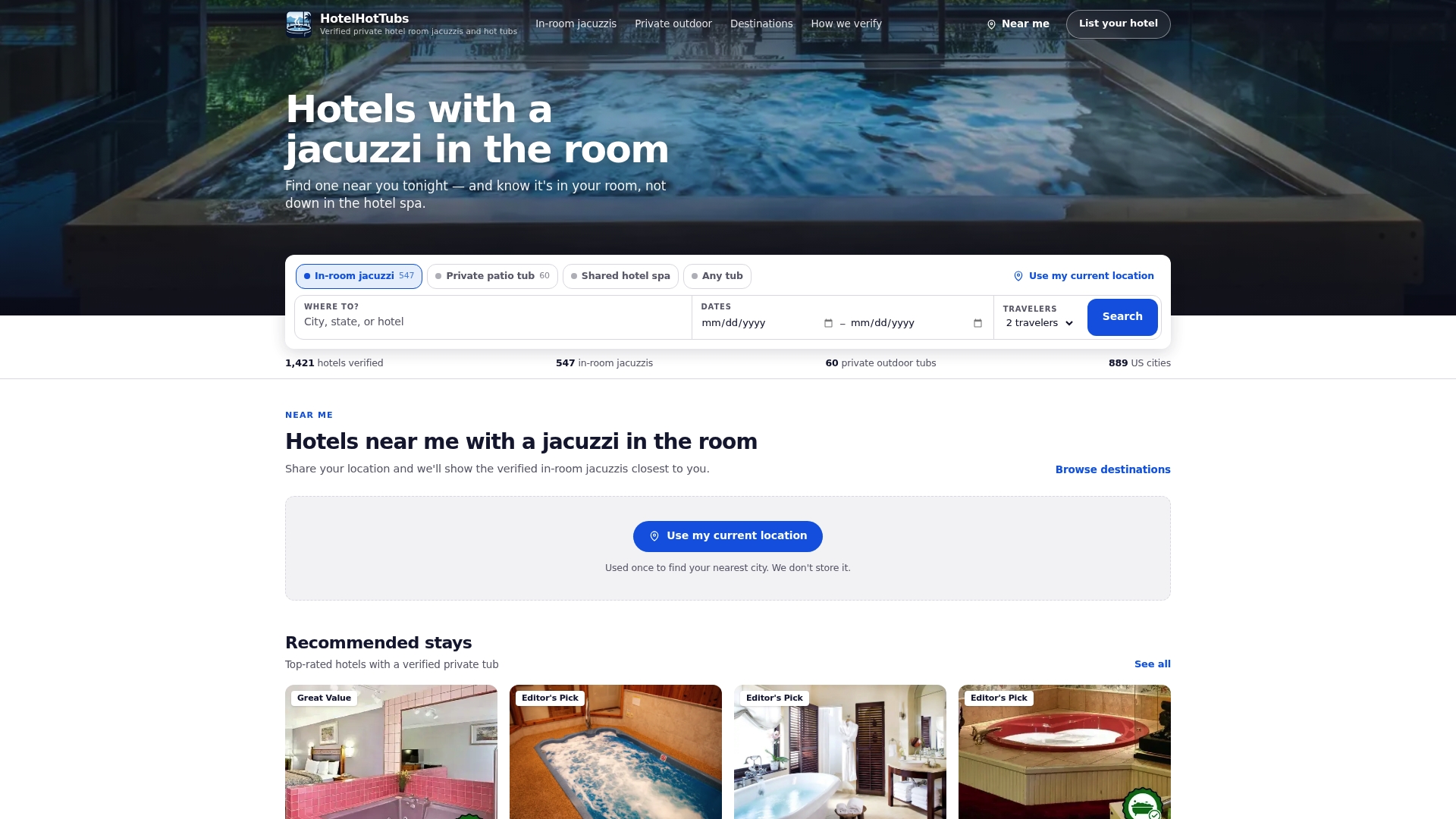
If you want jets specifically, filter straight to whirlpool suites rather than sorting through soaking-tub listings. Planning something for two, browse the romantic jacuzzi rooms category, where verified privacy is the whole point. Traveling on a tighter budget doesn’t mean giving up the tub. Check the budget-friendly jacuzzi rooms page for verified options that won’t blow up your trip cost.
For a last-minute trip, use the filters to narrow by city and room type, then call the property directly to confirm same-day availability before you book. It takes five extra minutes and it’s the difference between a private soak and a lobby full of strangers.
Sources
- What You Can Do to Stay Healthy in Hot Tubs | Healthy Swimming | CDC
- Alchemer 2026 hospitality benchmark reported by LODGING
This article is general information, not a substitute for advice from a qualified doctor. Consult a qualified healthcare professional about your own circumstances before acting on anything here.
FAQ
Is a Hot Tub in the Room Different From a Whirlpool Tub?
A hot tub usually refers to a jetted unit, sometimes freestanding or on a patio, while a whirlpool tub is jets built directly into an in-room bathtub. Both can be private to your room, but the listing needs to name the room type explicitly, the way AAA’s inspected listings do, rather than just naming a property amenity.
How Do I Know a Photo Shows the Actual Room I’m Booking?
Look for a verification badge or recent guest photos tied to that specific room type, not a generic marketing image. Hotel Hot Tubs checks room-level claims against guest evidence before a listing goes live, which is a stronger signal than a photo alone.
Are Hotel Hot Tubs Safe to Use?
They’re generally safe when properly maintained, but warm water and jets can support Legionella growth if a property skips regular water management. Check water clarity and odor on arrival, and avoid the tub if anything looks off.
What Fees Should I Expect on Top of the Room Rate?
Hotels charge a mandatory resort or amenity fee, averaging about $26 per night where it applies, on top of standard local lodging taxes. Always check the total price breakdown before comparing two listings on nightly rate alone.
How Much Does It Cost to Book Through Hotel Hot Tubs?
Room prices are set by each hotel and vary by city, season, and room type, so current rates are listed directly on the Hotel Hot Tubs site for each property. Filtering by budget, romantic, or whirlpool suite categories narrows results to your price range fast.