
Avoid Booking Surprises: 6 Checks to Verify a Hotel Spa Tub
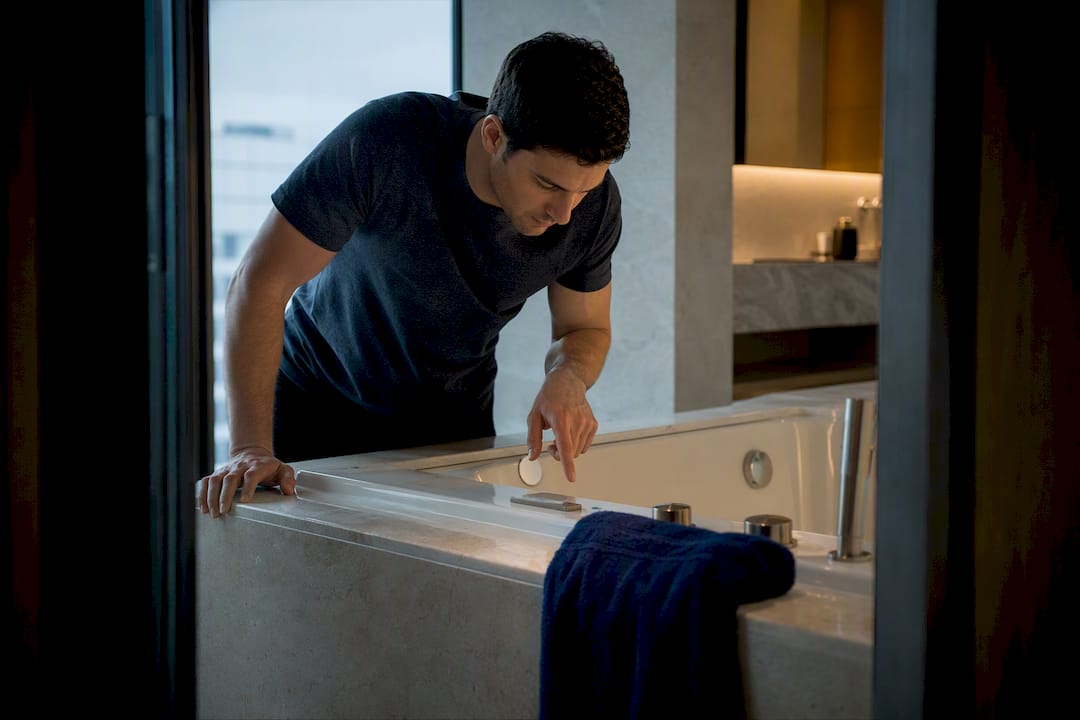
A spa tub is any bathtub or vessel built for soaking with heated, jetted water rather than a quick rinse. In practice, though, “spa tub” gets used for two very different things: a self-contained hot tub that stays filled and heated between uses, or a fill-and-drain jetted bathtub inside a bathroom. Jacuzzi, meanwhile, is a brand name, not a category, even though most people use it generically. That gap between marketing language and mechanical reality is exactly what trips up hotel guests.
TL;DR:
- Most hotel listings use generic terms that often misrepresent whether a tub is a private hot tub or a bathroom jetted tub.
- A genuine hot tub is a self-contained, continuously heated, and filtered vessel, unlike a fill-and-drain jetted bathtub.
- Proper maintenance and sanitation depend heavily on whether a tub is always full or filled fresh for each use.
- Prices vary widely, with portable hot tubs starting in the low thousands and in-ground spas costing significantly more, while bathroom jetted tubs are typically less expensive.
- Verifying a hot tub listing through photos and direct questions ensures accurate booking, avoiding misleading marketing language.
Table of Contents
- Spa Tub Meaning: Defining Hot Tub, Jacuzzi, and Jetted Bath
- Hot Tub vs. Jacuzzi vs. Spa Bath: The Differences That Actually Affect Your Stay
- How Hotels Label In-Room Jetted Tubs, Hot Tubs, and Private Spas
- Is a Hotel Spa Tub Safe? Sanitation and Maintenance Basics
- How to Verify a Spa Tub Listing Before You Book
- Booking a Jetted Tub vs. a Hot Tub: Which One Fits Your Trip
- From Roman Baths to Backyard Hot Tubs: A Short History
- What Spa Tubs Are Made Of: Materials and Build Types
- Why People Actually Use Spa Tubs: The Health Case
- The Environmental Trade-Offs of Running a Spa Tub
- What Spa Tubs Cost and What Drives the Price
- Why Getting the Terminology Right Matters More Than It Seems
- Find a Verified In-Room Hot Tub, Not a Guessing Game
- Sources
Spa Tub Meaning: Defining Hot Tub, Jacuzzi, and Jetted Bath
The terms overlap so much in everyday speech that most people never learn where one ends and the next begins. Here is the actual breakdown, based on how manufacturers and consumer guides define each one.
- Hot tub: A self-contained vessel with its own heater, filter, and pump, kept full of water between uses and treated with chemicals to stay sanitary. It is what Hot Spring Spas describes as a portable, above-ground unit designed for repeated use without draining.
- Spa: A broader industry term that can mean an in-ground hydrotherapy vessel, a commercial wellness facility, or simply a synonym for hot tub. Context decides which one you are looking at.
- Jacuzzi: A trademarked brand that invented the underwater jet system and became so dominant that its name is now used generically, the same way “Kleenex” stands in for tissue. Jacuzzi’s own history traces back to a family of Italian immigrant engineers, not a category of product.
- Jetted tub / whirlpool / spa bath: A standard bathtub fitted with jets, filled before each use and drained after, with no standing water or continuous filtration.
You will see “hot tub” attached to backyard installs and hotel courtyards, “Jacuzzi” slapped on almost anything with a jet regardless of brand, and “spa bath” or “whirlpool tub” reserved mostly for in-room bathroom fixtures. The Spruce notes that marketing rarely respects these distinctions, which is exactly why so many travelers book the wrong thing.
Hot Tub vs. Jacuzzi vs. Spa Bath: The Differences That Actually Affect Your Stay
Knowing the vocabulary is one thing. Knowing what each term implies about installation, plumbing, and cost is what actually protects you from a disappointing booking or a bad backyard purchase.
Installation splits into two camps: in-ground spas built into decking or concrete, and portable hot tubs that sit above ground and can be relocated. In-ground units look more permanent and often blend into landscaping, but they cost more to install and cannot move with you. Portable hot tubs trade some aesthetics for flexibility.
Plumbing, heating, and filtration is the single biggest functional divide. A hot tub or in-ground spa stays full year-round, with a heater and filter running continuously to keep the water safe between uses. A jetted bathtub has none of that. You fill it, use it once, and drain it, the same way you would a regular bath.
- Jets in hot tubs are typically more numerous and placed for targeted hydrotherapy on the back, neck, and legs.
- Jets in a bathroom jetted tub are usually fewer and positioned for general relaxation rather than therapy.
- Capacity ranges from single-person jetted tubs to hot tubs seating several people.
- Portability matters for resale: a shell-style hot tub can be sold and moved, while a built-in concrete or fiberglass spa cannot.
Pro Tip: If a hotel room photo shows a bathtub built into bathroom tile with no visible control panel or skirting, you are almost certainly looking at a jetted tub, not a true hot tub.
Cost and energy use follow the same pattern: continuously heated systems cost more to run but deliver a soak on demand, while fill-and-drain tubs cost less to operate but take longer to fill and never offer the same water volume.
How Hotels Label In-Room Jetted Tubs, Hot Tubs, and Private Spas
Hotel listings throw around “Jacuzzi suite,” “spa bath,” “hot tub room,” and “whirlpool tub” almost interchangeably, and the wording rarely tells you what you are actually getting — understanding guest experience in hospitality can help make better sense of these amenity presentations. One hospitality comparison of hotel room jacuzzis and hot tubs points out that photos and direct confirmation from the property are more reliable than the listing copy itself.
- “Jacuzzi suite” usually means a jetted bathtub in the bathroom, not a standalone hot tub, since Jacuzzi is used generically rather than literally.
- “Hot tub room” more often signals a self-contained, continuously heated and filtered unit, sometimes on a balcony or patio.
- “Whirlpool tub” almost always means a fill-and-drain bathroom fixture, similar to a jetted tub.
- Check the photos for a visible control panel, external skirting, or a location outside the bathroom. That usually means a real hot tub, not a bathtub with jets.
- Call the front desk and ask directly: “Is this a bathtub with jets, or a separate hot tub that stays filled and heated?”
Our breakdown of jacuzzi versus hot tub terminology walks through more of these labeling quirks if you want the full picture before you book.
Is a Hotel Spa Tub Safe? Sanitation and Maintenance Basics
Water that sits and recirculates needs active management, which is why the distinction between fill-and-drain and always-full systems matters for more than comfort. The CDC’s guidance on hot tub use stresses that proper filtration and disinfection are what keep recreational water safe, since bacteria and other organisms can multiply quickly in warm, standing water that isn’t treated correctly.
A jetted bathroom tub carries a different risk profile. Because it is filled fresh each time and drained after, there is no standing water for organisms to build up in over days or weeks. A continuously running hot tub or in-ground spa depends entirely on the property’s maintenance routine, chemical balance, and filter changes.
Basic guidance CDC and PoolSafely both emphasize: water should feel clean and clear, not cloudy or slippery, and a strong chemical odor can actually signal poor maintenance rather than good sanitation. Skip the soak if the water looks discolored, if jets aren’t circulating, or if you have open wounds, are pregnant, or have specific health conditions where a doctor has advised against hot water immersion.
How to Verify a Spa Tub Listing Before You Book
A little digging before you book saves you from arriving to a bathtub when you expected a private hot tub.
- Look for photos that show the tub outside the bathroom, or with visible external plumbing and a control panel.
- Watch for the word “private” attached to the tub, not just to the room or suite.
- Search the listing for “heated” or “filtered,” which usually signals a real hot tub rather than a jetted bathtub.
- Ask the hotel directly: “Does the tub stay filled and heated, or do we fill it ourselves each time?”
- Ask whether the tub is indoors, on a balcony, or in a private outdoor space.
- Treat generic stock photos or renderings, instead of real room photos, as a red flag.
Our whirlpool suite listings show what verified whirlpool and jetted tub rooms actually look like, which is a useful comparison point when you are vetting a listing yourself.
Booking a Jetted Tub vs. a Hot Tub: Which One Fits Your Trip
A jetted bathroom tub is perfectly adequate for an occasional romantic night or a one-off treat, especially if you are not planning to soak for long or share the tub. It costs less to book, requires no learning curve, and delivers most of the relaxation people actually want from a spa night.
A self-contained hot tub earns its premium for frequent use, groups, or genuine hydrotherapy needs like sore muscles after a hike or a ski day. The trade-offs are straightforward: hot tubs cost more, need more maintenance, use more energy, and are far less portable. Our guide to when an in-room hot tub is worth the extra cost breaks this down by trip type.
From Roman Baths to Backyard Hot Tubs: A Short History
Soaking in heated water for relaxation and healing goes back to Roman bathhouses and Japanese onsen traditions, both built around communal, mineral-rich hot springs rather than mechanical jets. The modern hot tub as most people know it, though, is a 20th-century invention. Jacuzzi, founded by Italian immigrant brothers in California, developed the first practical underwater jet pump in the 1950s, originally as a hydrotherapy device for a family member with rheumatoid arthritis.
That medical origin quickly became a consumer product. By the 1960s, Jacuzzi had adapted the technology into freestanding tubs marketed for home relaxation, and competitors followed with their own jetted systems throughout the 1970s and 1980s. Wood-barrel hot tubs, popular in that era, gave way to acrylic and fiberglass shells that were easier to insulate, heat, and maintain.
Hotels picked up on the trend as a differentiator for romantic getaways and ski resorts, first with shared outdoor spas, then increasingly with in-room jetted tubs marketed under the Jacuzzi name regardless of manufacturer. That branding shortcut, more than any technical shift, is why the terminology confusion persists decades later. The hardware evolved considerably. The vocabulary never caught up.
What Spa Tubs Are Made Of: Materials and Build Types
Material choice affects everything from price to how long a tub lasts, and it is one of the more overlooked details when comparing options.
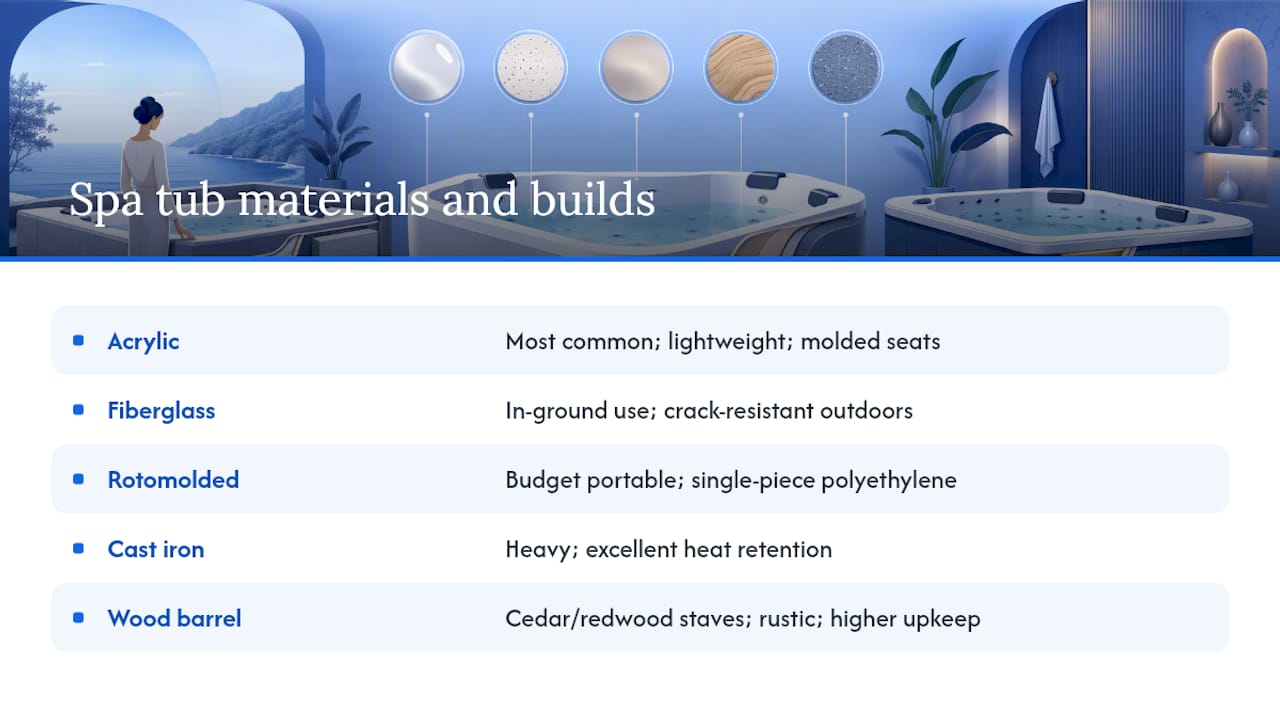
Acrylic is the most common shell material for both portable hot tubs and bathroom jetted tubs. It is lightweight, holds heat reasonably well, and comes in molded shapes that accommodate contoured seating. Acrylic shells typically sit over a foam or wood-frame structure for support.
Fiberglass shows up in higher-end in-ground spas and some portable units. It resists cracking better than acrylic in extreme temperature swings and holds up well over long periods outdoors, which is part of why it dominates in-ground spa construction.
Rotomolded plastic is common in budget portable hot tubs. It is a single-piece polyethylene shell, extremely durable against impact, but generally less refined in finish and insulation compared to acrylic.
Cast iron and enameled steel still appear in some built-in jetted bathtubs, offering excellent heat retention but significant weight, which limits where they can be installed.
Wood barrel construction, largely a legacy style now, uses cedar or redwood staves bound with steel hoops. It has a rustic look but requires more upkeep than modern shells and is less common in new hotel installations.
Cabinet skirting around portable hot tubs is usually synthetic wood-grain composite, chosen for weather resistance over real lumber.
Why People Actually Use Spa Tubs: The Health Case
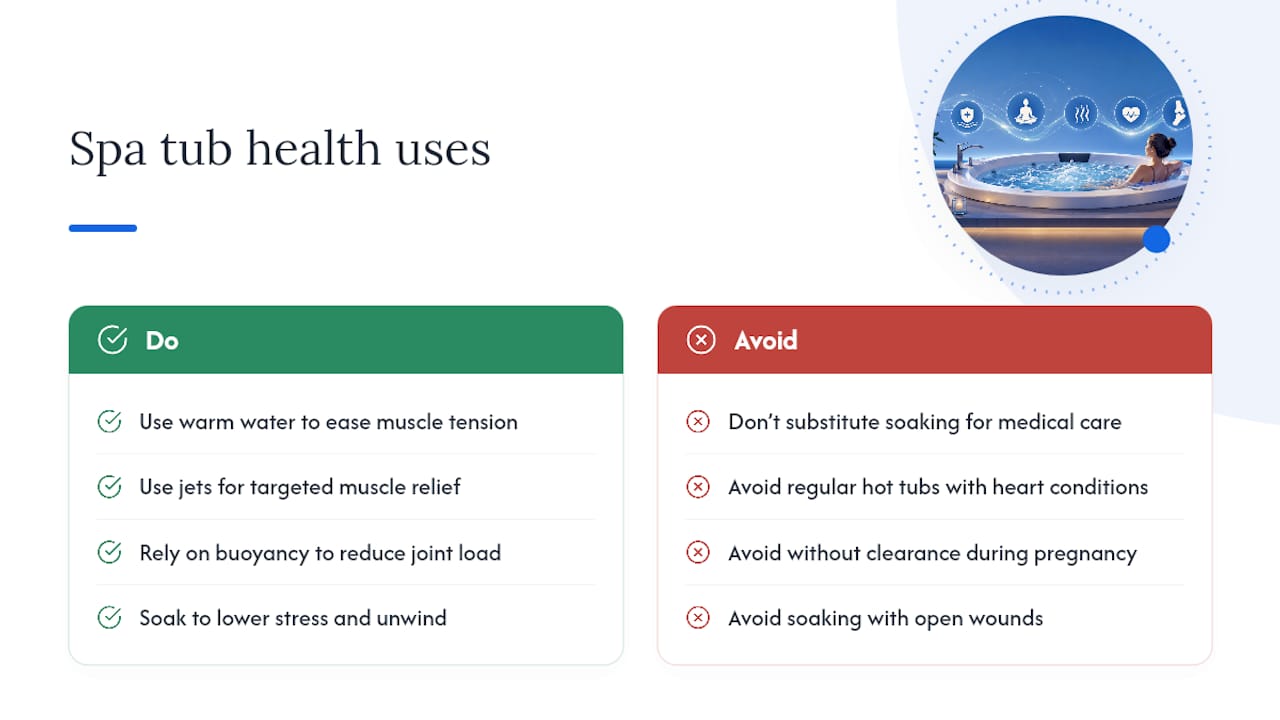
Warm water immersion does more than feel good after a long day. Heat causes blood vessels to dilate, which improves circulation and can ease muscle tension, a mechanism often cited in discussions of hydrotherapy and why physical therapists sometimes recommend warm water exercise for joint pain.
The combination of heat and jet pressure targets specific muscle groups, which is part of why hotel guests reach for an in-room hot tub after a day of skiing, hiking, or standing through a conference. Buoyancy also reduces the load on joints, making warm water immersion gentler on the body than dry-land stretching for people managing arthritis or recovering from minor strains.
There is a relaxation component that is harder to quantify but just as real. Heat combined with quiet, private time tends to lower stress in ways that show up anecdotally in travel reviews and hotel marketing alike, even without a specific health condition being treated. That is part of why the term “spa” carries a therapeutic connotation even when the setup is really just a jetted bathtub.
None of this replaces medical care for a real injury or chronic condition. Warm soaking is a comfort and recovery tool, not a treatment, and anyone with a heart condition, pregnancy, or open wound should get clearance before regular hot tub use.
The Environmental Trade-Offs of Running a Spa Tub
A continuously heated hot tub is an always-on appliance, and that has real energy implications compared to a bathtub you fill once and drain. Keeping several hundred gallons of water at 100 to 104 degrees Fahrenheit around the clock takes a steady draw of electricity, more in cold climates where the heater works harder against ambient temperature loss.
Water usage tells a different story. A hot tub is filled infrequently, sometimes just a few times a year between full drains and refills, while a jetted bathroom tub gets filled and drained every single use. Over a year of regular use, a fill-and-drain tub can actually consume more water in total, even though each individual fill is smaller.
Insulation quality matters more than most buyers realize. A well-insulated hot tub cabinet and cover can cut standby energy loss substantially compared to a poorly insulated unit left exposed to wind and cold, which is part of why energy costs vary so widely between similar-looking hot tubs. Hotels running multiple in-room units face this multiplied across a property, one reason some properties limit hot tub rooms to a smaller share of inventory rather than outfitting every suite.
What Spa Tubs Cost and What Drives the Price
Portable hot tub prices for home buyers generally start in the low thousands for basic rotomolded models and climb well into five figures for larger units with advanced jet systems, premium insulation, and smart controls. In-ground spas cost more upfront due to excavation, plumbing, and finishing work, often rivaling the cost of a small pool feature.
Jetted bathroom tubs sit at the opposite end. As a bathroom fixture rather than a standalone appliance, they typically cost a fraction of a hot tub, closer to a high-end bathtub than a backyard installation, though professional plumbing for the jet system adds to labor costs during a remodel.
For hotel guests, none of this shows up as a line-item cost, but it does show up in room rates. Properties with genuine self-contained hot tubs, especially private outdoor units, tend to charge a premium over rooms with a standard jetted bathroom tub, since the hot tub represents a bigger capital and maintenance investment for the property. Factors like jet count, seating capacity, energy efficiency features, and whether the unit is indoor or outdoor all move the price in either direction, for both homeowners and the hotels passing that cost along in nightly rates.
Why Getting the Terminology Right Matters More Than It Seems
Most travelers assume “Jacuzzi suite” and “hot tub room” mean the same thing, and most of the time nobody corrects that assumption until they arrive and find a bathtub with jets instead of the private hot tub they pictured. That gap between expectation and reality is not a minor annoyance. It is the single most common complaint pattern across hotel jacuzzi bookings, and it comes down entirely to loose language in listings.
Hotel Hot Tubs exists because verifying the difference between a jetted tub and a genuine private hot tub takes more than reading a room description. Every listing gets checked against real photos, not stock imagery, and rooms get filtered by whether the tub is truly private and self-contained rather than a bathroom fixture wearing a Jacuzzi label. That verification step is the whole reason SoakAtlas exists as a state-by-state directory: so a search for a private hot tub actually returns one.
— Logan Oneal
Find a Verified In-Room Hot Tub, Not a Guessing Game
Hotel Hot Tubs solves the exact problem this article just walked through: listing descriptions that don’t match what’s actually in the room. Every property in the directory is filtered by real amenity type, not marketing language, with verified photos showing the actual tub, its controls, and whether it’s a private outdoor setup or an in-room unit.
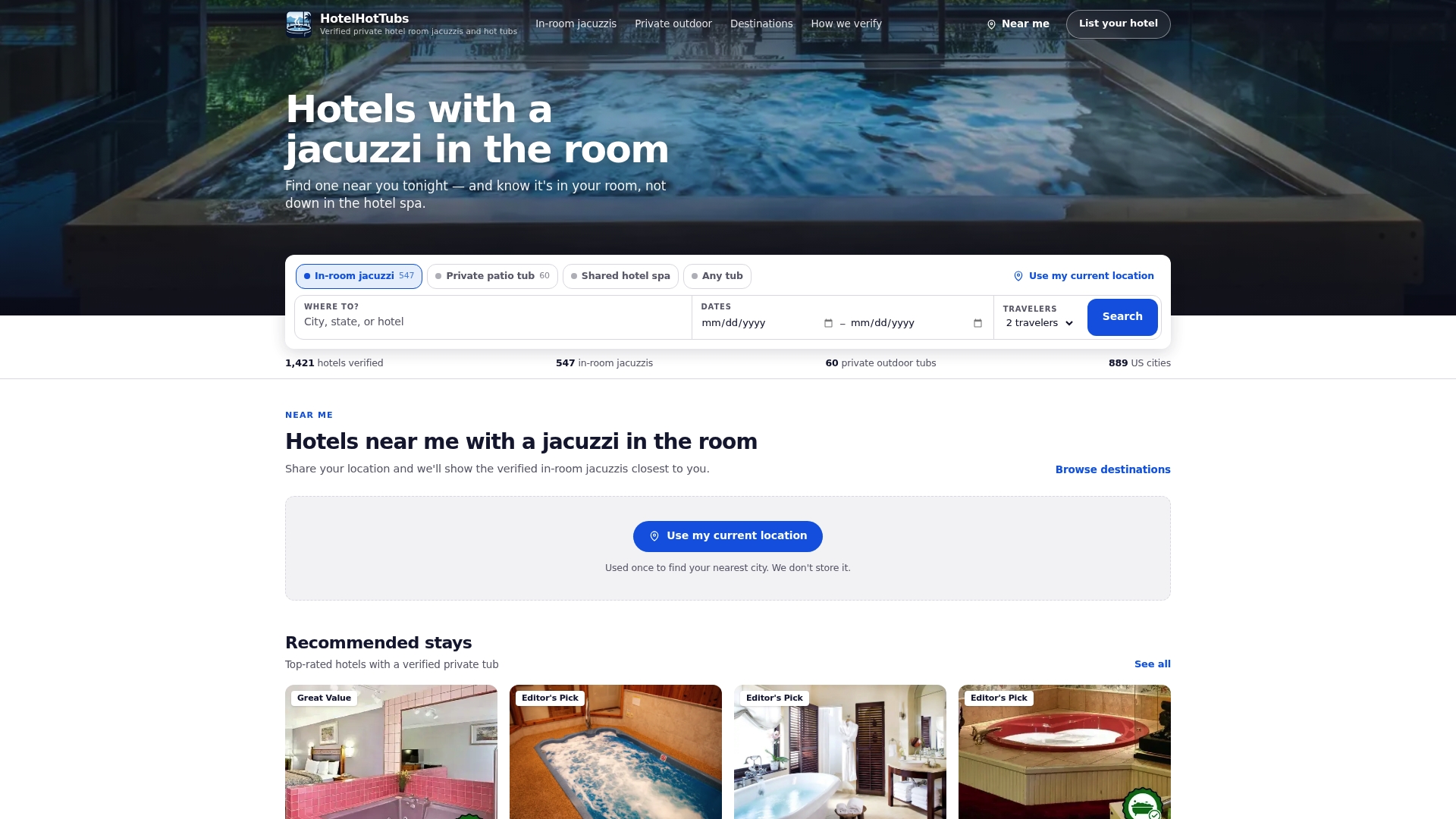
Start with the main search for hotels with private in-room jacuzzis and filter by trip type, whether that’s a romantic weekend or a budget-friendly stay under $250. If you want to compare suite options with confirmed private tubs, the suites category breaks down what’s available by city. Every listing has already been checked, so you can book without wondering whether “Jacuzzi suite” actually means what you think it means.
Sources
- What is the Difference Between a Hot Tub, Spa and a Jetted Bath Tub? - Hot Spring Spas
- What’s the Difference Between Jacuzzis, Hot Tubs, and Spas? - The Spruce
- Jacuzzi - Wikipedia