
Aim for 100–102°F: Verify a Safe Hotel Jacuzzi Before You Book
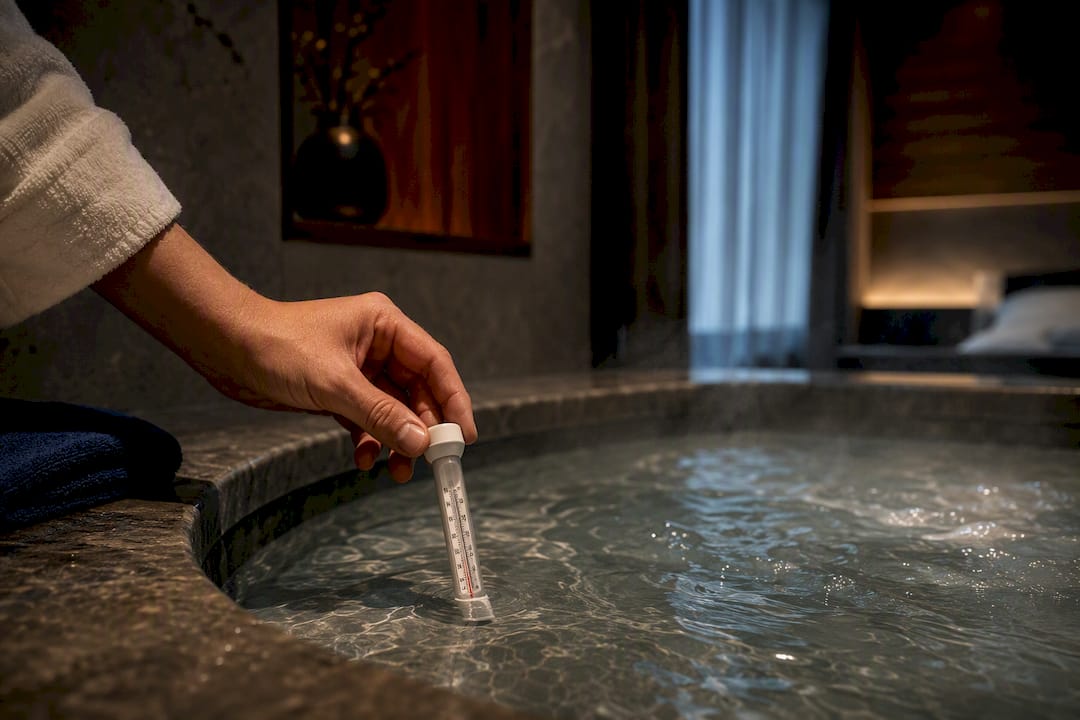
Treat 104°F (40°C) as the absolute safety ceiling for any hotel in-room jacuzzi. Most guests prefer the water somewhere in a moderate warm range, and most units default near a comfortable temperature out of the box. If the display looks off or there is no display at all, ask the front desk or check the water with a thermometer before you get in.
TL;DR:
- Most hotel in-room jacuzzis are set to a comfortable temperature between 100°F and 102°F, with 104°F being the absolute safety limit.
- The displayed panel temperature may differ from the actual water temperature due to heating system behavior or recent water flow, so always verify with a thermometer before soaking.
- Hot tub water should never exceed 104°F, and session times should be limited to 15-20 minutes, especially for vulnerable groups like pregnant women or those with health conditions.
- Temperature adjustments can take 20 minutes or longer to affect the water, and repeatedly changing settings without waiting can prolong the heating process unnecessarily.
- Always inspect the water quality and system controls before entering, and confirm room amenities and controls with the hotel ahead of time to avoid surprises.
Table of Contents
- Hotel Jacuzzi Temperature Ranges Explained
- How Hot Is Too Hot, and Who Should Skip the Soak
- How Jacuzzi Controls Work and What to Expect When You Adjust Them
- Your 60-Second Check-In Routine for a Safe Soak
- Why Verified Listings Matter More Than Guests Realize
- Find a Verified In-Room Jacuzzi Before You Book
- Sources
- FAQ
Hotel Jacuzzi Temperature Ranges Explained
Private in-room units usually allow a selectable range starting around 65°F and topping out at 104°F, the same ceiling the CDC sets for all hot tubs. Nobody actually soaks at 65°F. That low end exists mostly so the unit can sit idle between guests without wasting energy.
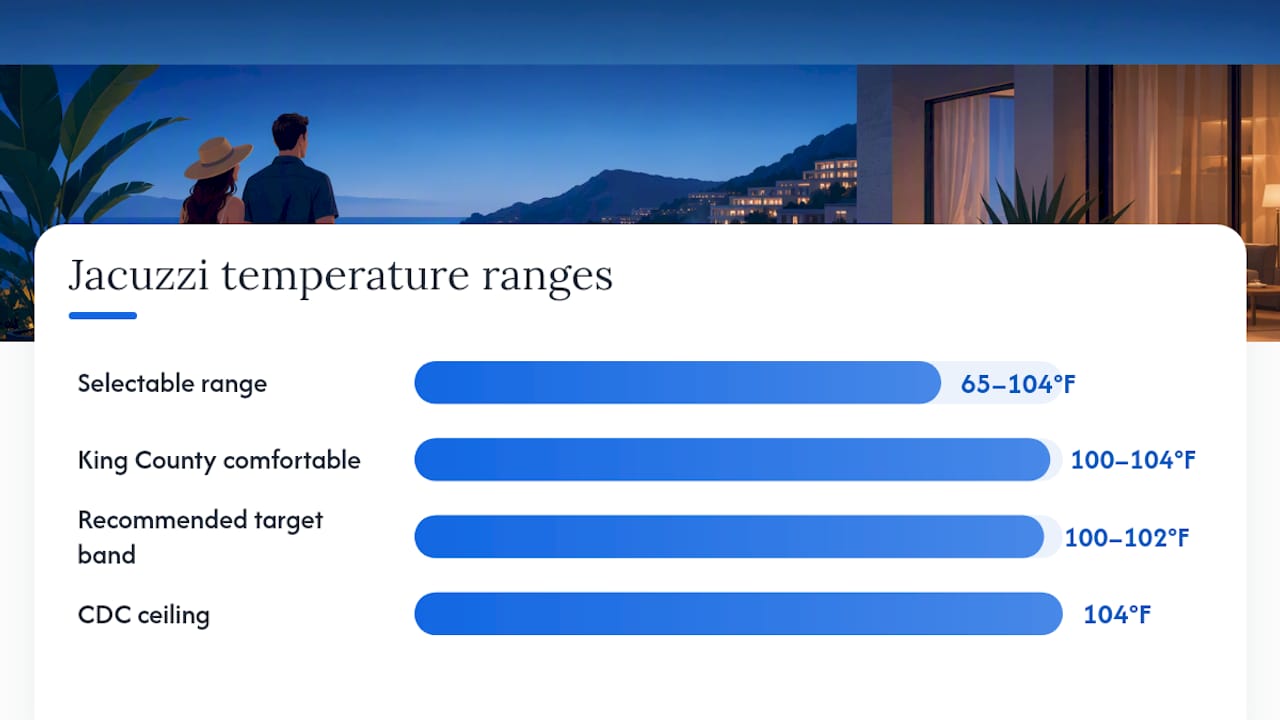
What guests actually dial in is a much narrower band. King County’s spa safety guidelines list 100°F to 104°F as the comfortable zone for healthy adults, while plenty of people find anything past 102°F too intense for a long soak. Manufacturer manuals back this up directly: Jacuzzi’s J-LX documentation sets the factory default at roughly 100°F, with adjustments made in 1°F increments.
Here’s where it gets confusing for guests: the number on the panel isn’t always the number in the water.
- Jets running can pull in slightly cooler water from pipes that haven’t been used recently, dropping the felt temperature a degree or two.
- A fresh fill (common in bathtub-style whirlpool units without a heater) mixes hot and cold on demand, so the actual temperature depends on how the taps were set, not a stored setpoint.
- Thermostat tolerance built into most heaters runs about ±5°F, meaning a unit “set” to 102°F could genuinely read anywhere from 97°F to 104°F on a hand thermometer.
None of this is a defect. It’s just how heated water systems behave, and it’s exactly why checking the actual water, not just trusting the display, matters before you settle in.
How Hot Is Too Hot, and Who Should Skip the Soak
The CDC caps safe hot tub water at 104°F (40°C), full stop. Above that, your body loses its ability to cool itself efficiently, and the risk of hyperthermia climbs fast, especially the longer you stay in.
CDC guidance in brief: Hot tub water should never exceed 104°F. Alcohol and hot water don’t mix well because alcohol impairs your sense of overheating. Children under 5 shouldn’t use hot tubs at all, and anyone pregnant should talk to a healthcare provider before soaking.
Soak time matters as much as temperature. General guidance points toward capping sessions at 15 to 20 minutes once you’re near the upper end of that range, and cutting that shorter for older adults, anyone with heart conditions, and pregnant guests. A private in-room tub doesn’t change any of this. The water is still hot, you’re still susceptible to the same heat stress, and the CDC’s precautions apply exactly as they would in a shared spa.
A few water-quality red flags mean you should skip the tub and call the front desk instead of climbing in:
- Cloudy or discolored water
- A strong chemical smell, or no smell of disinfectant at all
- Visible debris, hair, or residue along the waterline
- A jet system that sputters, runs weak, or won’t shut off properly
Any of those point to a maintenance issue, not something you should try to fix yourself.
How Jacuzzi Controls Work and What to Expect When You Adjust Them
Most private units fall into one of three categories, and knowing which one you’ve got changes how you should react to a temperature that feels wrong.
- Digital setpoint panels let you punch in a target temperature, and the heater cycles on and off to hold it there over time.
- Thermostatic fill valves mix hot and cold water as you fill the tub, common in whirlpool bathtubs rather than true circulating spas.
- Fixed or no guest control means the temperature is set by hotel staff or maintenance, and there’s no panel for you to touch at all.
The part that trips up a lot of travelers: pressing “warmer” on a digital panel doesn’t heat the water instantly. It raises the setpoint, and the heater then works toward that new number, sometimes taking 20 minutes or longer depending on the unit and how much water needs heating. Mashing the button repeatedly doesn’t speed anything up. It just resets the target over and over.
Pro Tip: If the water feels cooler than you’d like, set your target temperature once, then leave the room for 20 to 30 minutes before checking again. Repeatedly adjusting the panel just confuses the heating cycle and wastes your soak time.
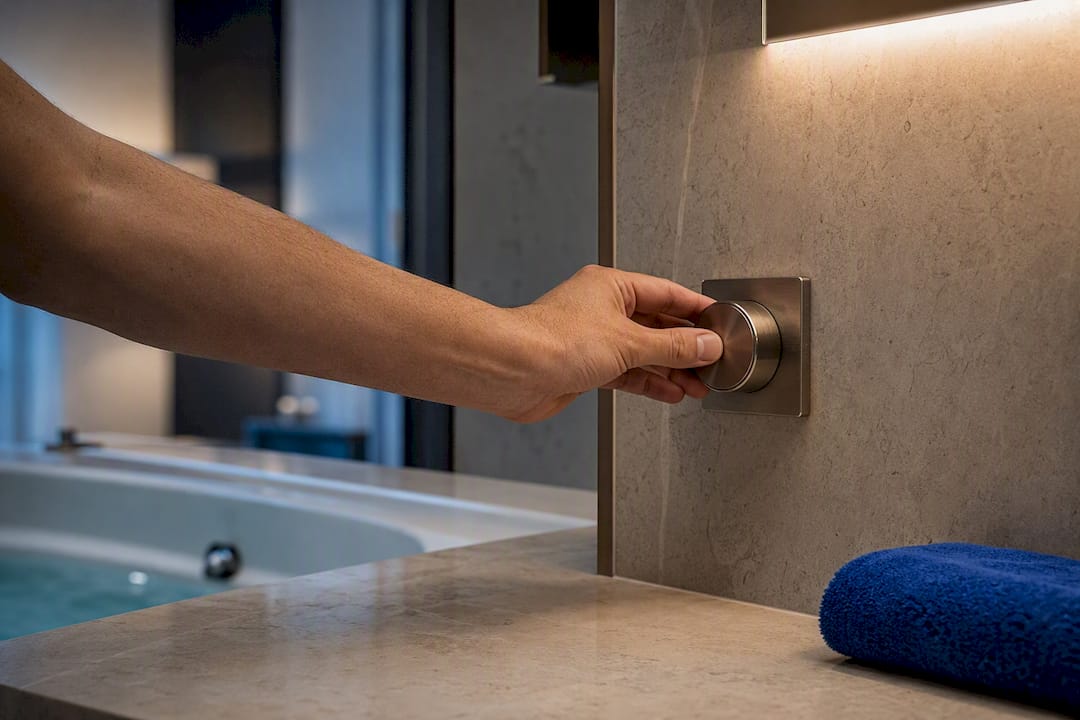
If you genuinely can’t get the temperature where you want it after one adjustment attempt, that’s your cue to call the front desk rather than keep fiddling.
Your 60-Second Check-In Routine for a Safe Soak
A little homework before you even arrive saves you from surprises. Message the property ahead of time and ask directly whether the in-room jacuzzi has adjustable temperature or preheat options, and save that written reply. It becomes useful leverage if something doesn’t match what you were told.
Once you’re in the room, run through this quickly:
- Look over the tub itself. Check for visible instructions, a control panel, or a printed card explaining the settings.
- Run the jets for 10 to 15 seconds. This clears standing water out of the lines and gives you a better read on actual temperature.
- Check the display, or use a thermometer. Don’t assume the number on the panel matches the water, especially in bathtub-style units.
- Test the water with your hand at the edge before you get in fully. If it feels scalding rather than pleasantly hot, don’t risk it.
If something’s off, whether the display seems wrong, water feels too hot or too cold, or there’s no way to adjust it, contact the front desk or maintenance and ask for a documented fix or a room change. Don’t open control panels, pull covers, or try to bypass any built-in limiter yourself. That’s a maintenance issue, not a DIY project, and tampering with it can void the room’s safety features entirely.
Why Verified Listings Matter More Than Guests Realize
Most complaints about hotel jacuzzi temperature don’t come from the water being unsafe. They come from guests arriving with zero idea what kind of control system they’re getting, or worse, booking a room that turns out to have a shared spa instead of the private tub they pictured.
That gap is exactly what Listings are often checked for whether the tub is genuinely in-room versus shared, whether there’s documentation or guest photos showing the actual controls, and whether staff have noted if preheat or on-request adjustments are available. It’s a small thing, but it’s the difference between arriving informed and arriving to guess your way through an unfamiliar panel at 11 p.m.
Verification doesn’t promise every unit behaves identically. It just means you’re not walking in blind, which is half the battle when it comes to a comfortable, safe soak.
— Logan Oneal
Find a Verified In-Room Jacuzzi Before You Book
Hotel Hot Tubs exists because too many travelers book a room expecting a private jacuzzi and end up with a shared spa down the hall, or a tub with no clear way to adjust the temperature at all. Listings are often checked for that distinction before they go live, so guests can have a clearer idea of what they are reserving.
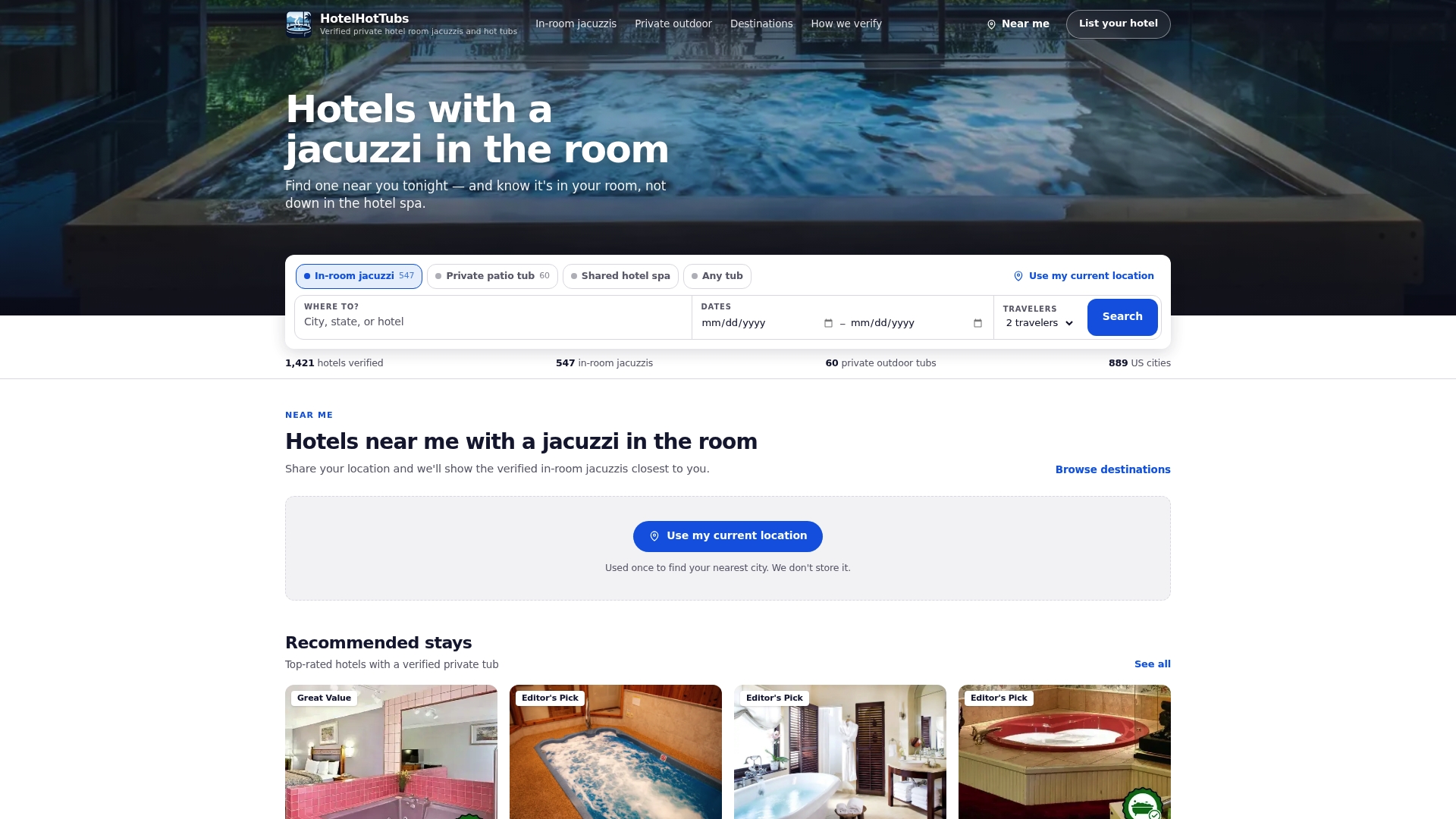
Start by browsing hotels with a jacuzzi in the room if you want the full range of verified options, or narrow things down by what matters most to your trip. Couples planning a weekend away can check romantic hotels with a jacuzzi in the room, while anyone watching their budget can filter through cheap hotels with a jacuzzi in the room without giving up the verification standard. If you want more space and amenities, jacuzzi suites and whirlpool suites are both categorized separately.
Before you book, message the property directly and ask about preheat options or how adjustments work, the same way you’d confirm any other amenity. Save the reply, then book with confidence through a listing that’s already been checked for exactly the kind of surprise this article just walked you through.
This article is general information, not a substitute for advice from a qualified doctor. Consult a qualified healthcare professional about your own circumstances before acting on anything here.
Sources
- What You Can Do to Stay Healthy in Hot Tubs | Healthy Swimming | CDC
- J-LX® Collection
- Spa and hot tub safety guidelines (King County)
- J-300™ COLLECTION (Jacuzzi owner manual)
FAQ
What Is the Safe Maximum Temperature for a Hotel Jacuzzi?
The CDC sets 104°F (40°C) as the maximum safe temperature for any hot tub, private or shared. If the water feels hotter than that or the display reads higher, don’t get in, and report it to hotel staff.
What Temperature Do Most Guests Set a Hotel Jacuzzi To?
Most guests land somewhere between 100°F and 102°F, which lines up with the comfortable range noted in public health spa guidelines. Factory defaults on many units sit close to 100°F straight out of the box.
How Long Does It Take a Hotel Jacuzzi to Reheat After an Adjustment?
It depends on the unit, but expect a wait time after raising the setpoint, since the heater has to bring the water up gradually rather than instantly. Pressing the control repeatedly won’t speed this up.
Is It Safe to Use a Hotel Jacuzzi While Pregnant?
The CDC recommends talking to a healthcare provider before using a hot tub during pregnancy, and shortening soak time if you do use one. Lower temperatures and brief sessions reduce the risk of overheating.
How Does Hotel Hot Tubs Verify In-Room Jacuzzi Listings?
Hotel Hot Tubs checks whether a listing’s tub is genuinely private and in-room rather than a shared spa, and looks for guest photos or documentation of the actual controls. You can browse verified listings directly on Hotel Hot Tubs.