
60 Second Check for Guests: Spot Chlorine in an In Room Jacuzzi
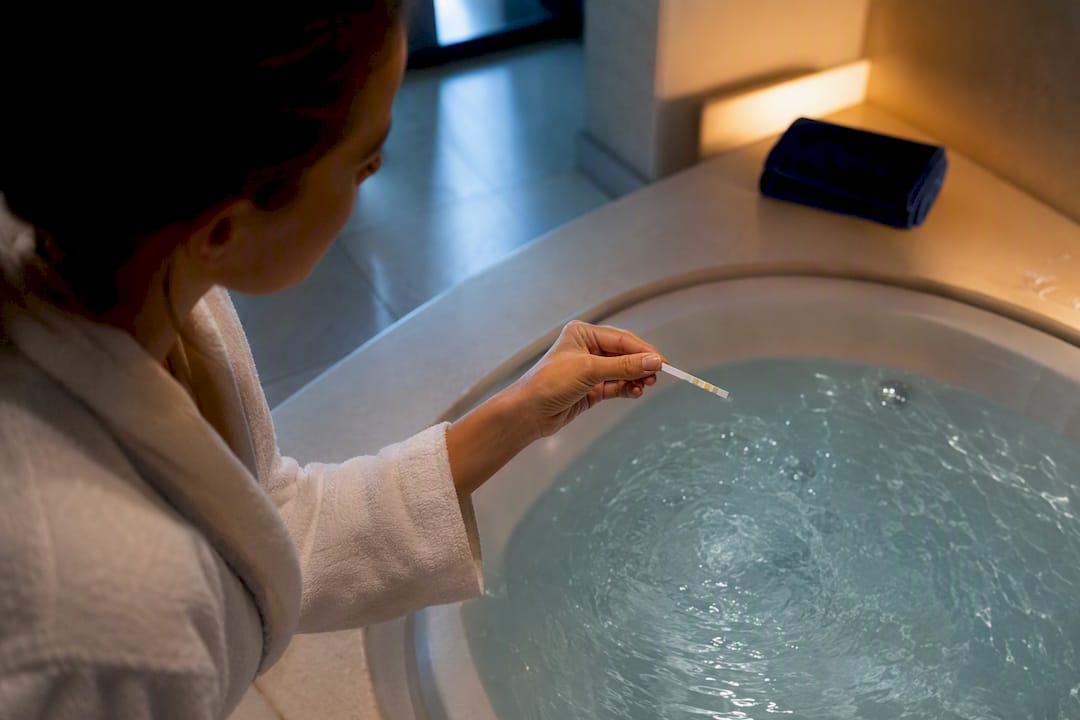
Yes, most in-room jacuzzis are chemically disinfected, usually with chlorine or bromine, sometimes generated through a salt system. What varies is upkeep, not the chemistry. Practices differ hotel to hotel, and guests can’t test the water themselves. The best cue you have on arrival: a harsh chemical smell or cloudy, foamy water means something’s off, not that the tub is “extra clean.”
TL;DR:
- Most in-room jacuzzis are disinfected with chlorine or bromine, but maintenance practices and water quality vary widely between hotels.
- Proper upkeep includes routine dosing, weekly shock treatments, and flushing jet lines, but guests cannot verify these procedures themselves.
- Checking for cloudy water, strong chemical odors, or slime around jets before use can help assess water safety, along with asking about recent maintenance logs.
- Proper water chemistry requires maintaining free chlorine or bromine at recommended levels and keeping pH within 7.0 to 7.8 for effectiveness and safety.
- Verified property listings are key, as many hotels lack transparency about their maintenance routines, and private tubs usually have less oversight than shared pools.
Table of Contents
- Are In-Room Jacuzzis Chlorinated, and How Does It Actually Work?
- What Chlorine and pH Levels Should a Jacuzzi Actually Have?
- How Do Hotels Clean In-Room Jacuzzis Between Guests?
- What Should Guests Check Before Using an In-Room Jacuzzi?
- What Health Risks Come From Poorly Maintained Hot Tubs?
- How Hotelhottubs Verifies In-Room Jacuzzis for Travelers
- The Honest Trade-Off Between Privacy and Verification
- Find a Verified In-Room Jacuzzi Without the Guesswork
- Sources
- FAQ
Are In-Room Jacuzzis Chlorinated, and How Does It Actually Work?
Chlorine and bromine are the two workhorse sanitizers behind nearly every jacuzzi you’ll soak in, whether it’s in a spa lobby or bolted into your suite. Both kill bacteria and organic waste on contact, and both need to stay at a steady, measurable level between guests, not just after a fresh fill. Staff typically dose the water routinely and run a weekly “shock” treatment, a burst of superchlorination that spikes the sanitizer level to burn off waste byproducts before bringing it back down to a safe soaking range, a practice Jacuzzi’s own maintenance guidance recommends as standard upkeep.
Filtration and circulation matter just as much as the chemicals themselves. Water has to keep moving through the filter and jet lines, or sanitizer never reaches the corners where bacteria actually grow.
- Free chlorine or bromine dosing: the baseline sanitizer maintained between uses.
- Weekly shock treatment: a temporary spike in sanitizer to clear out chloramines and organic buildup.
- Filtration and circulation: keeps chemicals distributed evenly instead of settling in dead zones.
- Jet-line flushing: clears internal plumbing where residue and biofilm collect out of sight.
Some tubs add ozone generators or mineral cartridges as an assist, cutting down how much chlorine you need without replacing it. Saltwater systems work the same way. They use electrolysis to convert salt into chlorine on-site, and while the water feels softer, it’s still chlorine doing the actual disinfecting, according to HotSpring’s comparison of salt and chlorine systems. Marketing terms like “chlorine-free” almost always mean “very low chlorine plus a filtration assist,” not zero chemicals.
What Chlorine and pH Levels Should a Jacuzzi Actually Have?
The number to know: free chlorine should be maintained at least at a minimum recommended level, or bromine within a typical effective range, with pH held within a safe and effective range, according to CDC operating guidance for public pools, hot tubs, and splash pads. That “free” qualifier matters. It refers to sanitizer that’s still active and available to kill contaminants, as opposed to chlorine that’s already been spent fighting waste and turned into chloramines, the compound responsible for that harsh, eye-stinging smell.
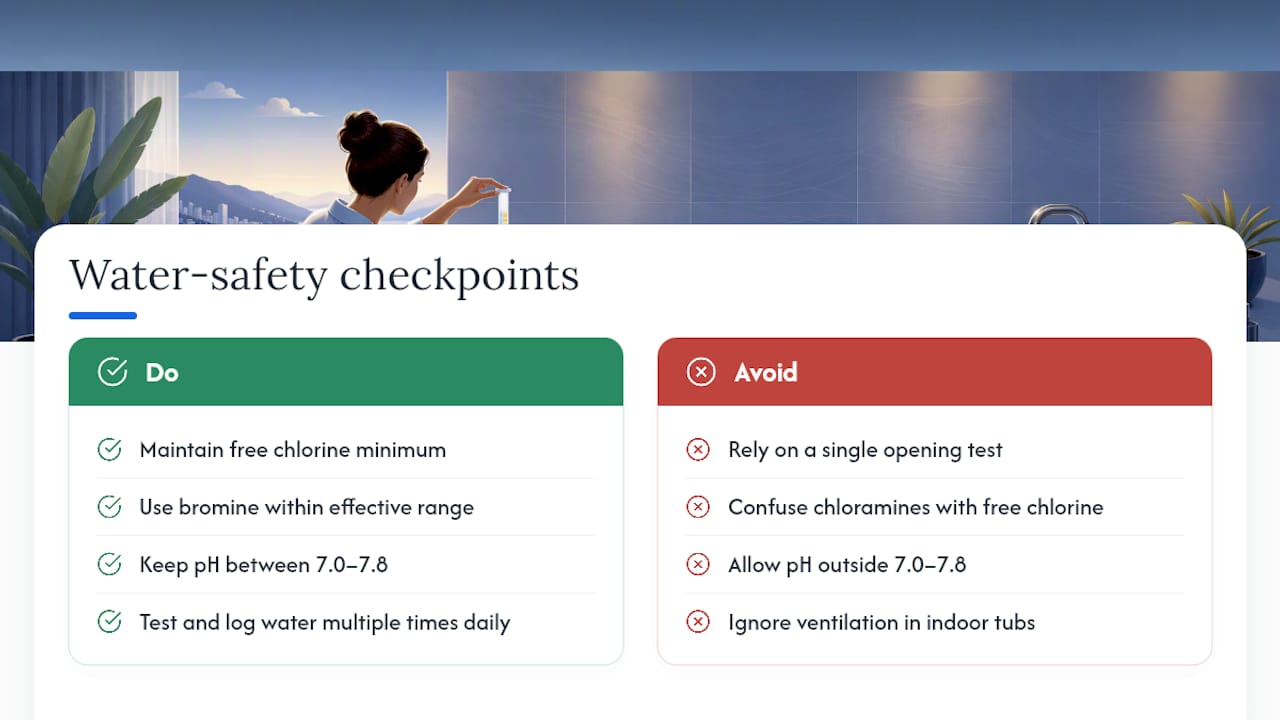
In a properly run facility, staff test water chemistry multiple times a day and log the readings, not just once at opening. pH outside that 7.0 to 7.8 window makes chlorine far less effective even when the concentration looks fine on paper, and it’s also what causes skin and eye irritation. Indoor tubs carry one extra wrinkle: chlorine off-gassing builds up in an enclosed room faster than outdoors, so ventilation becomes part of the safety equation, not an afterthought.
How Do Hotels Clean In-Room Jacuzzis Between Guests?
A well-run turnover isn’t just wiping down the shell and calling it done. It typically involves draining the tub, disinfecting the surface, flushing the jets and internal lines, cleaning or swapping filters, and logging the work so there’s a record of what happened and when.
- Drain and refill the tub completely rather than topping it off.
- Disinfect the shell with an appropriate cleaner, not just soap and water.
- Flush jet lines and plumbing to clear residue that surface cleaning never touches.
- Clean or replace filters so circulation stays effective.
- Log the maintenance with a date and time, ideally something a manager could produce on request.
That third step is the one guests never see and hotels most often skip. Biofilm builds up inside jet plumbing whether or not the visible shell looks spotless, and wiping the surface does nothing to touch it. It takes an actual flush, sometimes paired with a chemical treatment, to clear it out.
There’s also a regulatory gap worth knowing about. Public pools and spas usually fall under health department inspection, but a private in-room tub in a hotel suite is often treated as a private amenity, which can mean less external oversight than the shared hot tub down the hall.
Pro Tip: If you want a fast gut check on housekeeping standards, look at the towels and grout in the bathroom. A property that cuts corners on visible cleaning tends to cut corners on the plumbing you can’t see, too.
What Should Guests Check Before Using an In-Room Jacuzzi?
You don’t need a test kit to get a reasonable read on a tub before stepping in. A few quick checks cover most of what matters.
- Run the jets for five to ten minutes and watch for cloudy water, foam, or flakes.
- Check for dark residue or slime around the jet openings.
- Notice the smell. A strong chemical odor usually points to chloramines and imbalance, not proof the water is well sanitized.
- Ask staff when the tub was last drained and whether jet lines get flushed on a schedule.
- Ask if sanitizer levels are tested and logged, and whether you can see that log.
- Shower before and after soaking, and crack a window or run the bathroom fan if the room feels stuffy.
Pro Tip: A front desk that answers your maintenance question instantly, without hedging, is usually a good sign. Hesitation or a blank stare is the real red flag, more than anything you’ll spot in the water.
For a longer walkthrough of this exact process, a 60 second jacuzzi check guests can run through at check-in is available.
What Health Risks Come From Poorly Maintained Hot Tubs?
Warm water with weak sanitizer is close to ideal for bacteria, and Pseudomonas is the usual culprit, causing itchy rashes sometimes nicknamed “hot tub rash” along with outer ear infections. Go the other direction, water that’s overtreated or badly balanced, and you get skin and eye irritation, plus airway irritation from chloramine buildup in a poorly ventilated room.
Neither failure mode is rare, and medical reviews of in-room hot tub safety note that a private tub cuts down on crowd exposure but doesn’t remove the need for real sanitation. Guests still can’t verify water quality just by looking. A few precautions cover most of the risk: keep your head out of the water, cap soak time to avoid overheating, and skip the tub entirely if you’re pregnant, immunocompromised, or managing a condition where hot water is a concern. When in doubt, ask a doctor before you book, not after.
How Hotelhottubs Verifies In-Room Jacuzzis for Travelers
Booking sites routinely blur “in-room jacuzzi” with a shared pool spa down the hall, which is exactly the kind of ambiguity that leads to a disappointing arrival. Each listing is verified with photo evidence and guest testimonials before labeling a property as having a true in-room private tub, rather than relying on a hotel’s own marketing copy.
That verification doesn’t replace the checklist above. It narrows your search to properties actually worth checking. Once you’ve found a verified listing, the smart move is still to confirm maintenance details directly with the hotel before you arrive.
The Honest Trade-Off Between Privacy and Verification
A private tub in your own room beats a shared spa on hygiene grounds most of the time. Fewer bodies, less crowd contact, no waiting your turn behind strangers. But privacy also means less outside oversight, and that’s the part travelers tend to forget when they’re picturing the getaway instead of the plumbing behind the wall.
My take: don’t let the appeal of a private soak talk you out of asking a basic maintenance question at check-in. Favor listings that are actually verified over ones that just look good in a photo, and treat a hotel’s willingness to answer a direct question about flushing and testing as more telling than anything printed on the room description.
— Logan Oneal
Find a Verified In-Room Jacuzzi Without the Guesswork
This site solves the exact problem this article is about: you can’t tell from a generic listing whether “hot tub” means your own private jacuzzi or a shared spa three floors down. Every listing on the site is verified with photo evidence and guest reviews specifically confirming the tub is in the room, not just somewhere on the property.
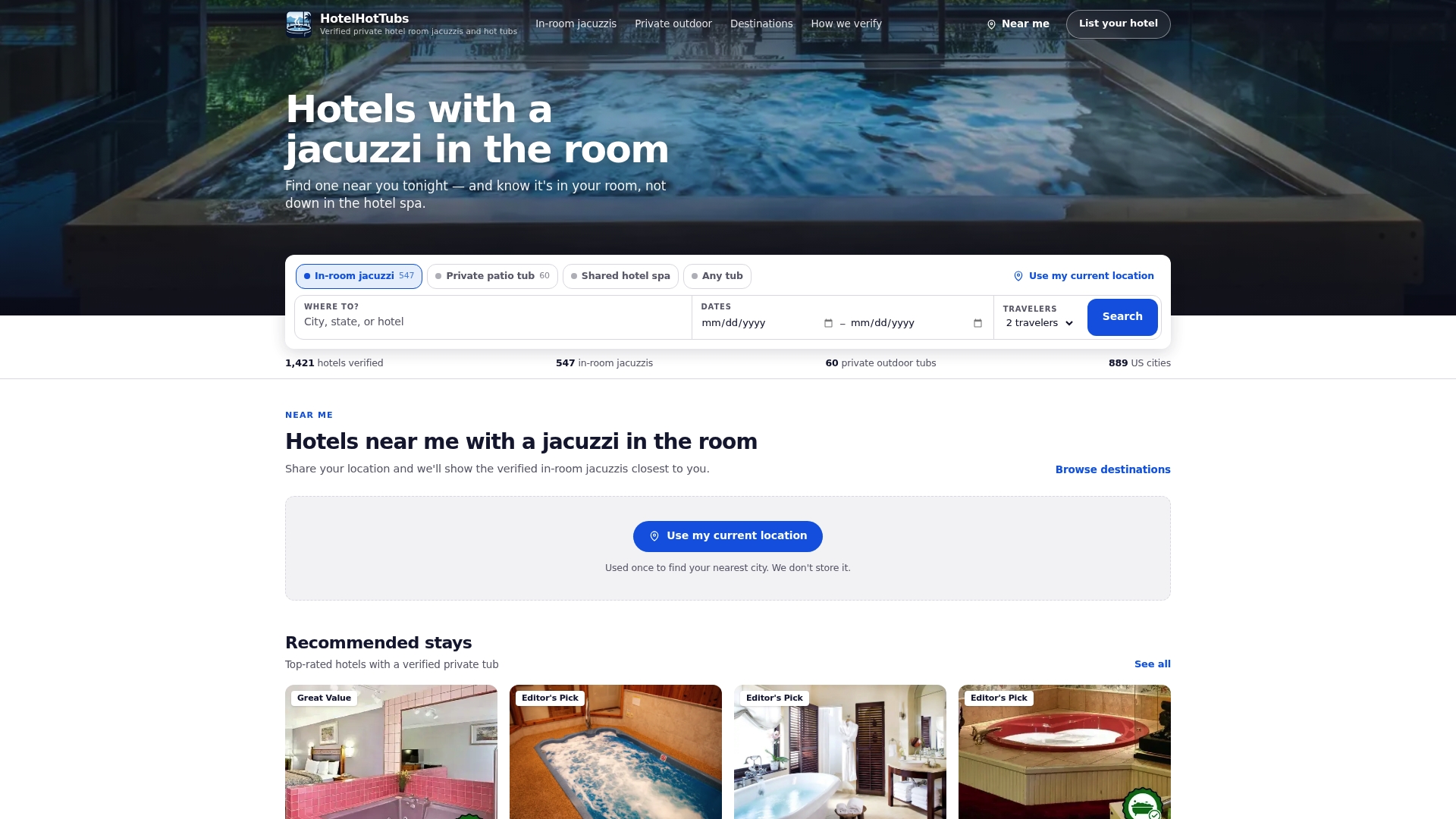
Search filters let you narrow by trip type and budget, whether you’re after romantic hotels with a jacuzzi in the room, cheap hotels with a jacuzzi in the room, or a whirlpool suite built for a longer stay. Verification narrows your options to rooms that actually match what you’re picturing. From there, run the checklist above at check-in, and if you have any doubts about maintenance, ask before you unpack. Start your search on Hotelhottubs and book a jacuzzi suite that’s confirmed, not guessed at.
This article is general information, not a substitute for advice from a qualified doctor. Consult a qualified healthcare professional about your own circumstances before acting on anything here.
Sources
- Operating public pools, hot tubs, and splash pads | CDC
- Spa and hot tub safety guidelines | King County Public Health
- How to clean a hot tub | Jacuzzi
FAQ
Are hotel room jacuzzis clean?
Most are cleaned and disinfected between guests, typically with chlorine or bromine, but standards vary by property. A private in-room tub with a documented drain-and-flush routine is generally a safer bet than one where staff can’t answer basic maintenance questions.
Is there a hot tub that doesn’t use chlorine?
Not really. Salt systems and low-chlorine manufacturer options exist, but salt systems generate chlorine on-site through electrolysis, and “chlorine-free” branding usually means very low chlorine paired with filtration or mineral adjuncts, not zero sanitizer.
Does a hot tub release toxins from your body?
No credible evidence supports the idea that soaking pulls toxins out through your skin. Warm water can relax muscles and open pores, but detoxification happens through your liver and kidneys, not a jacuzzi jet.
Why are some hotels removing hot tubs from rooms?
Upkeep costs and liability concerns drive a lot of these decisions, since jet-line flushing and chemical monitoring take real staff time and expertise. Some properties decide it’s simpler to phase them out than maintain them correctly, which is exactly why verified listings matter when you’re specifically booking for the tub.
How often should hotel jacuzzis be drained and cleaned?
Standard practice is a full drain, disinfect, and jet-line flush between guests, not just a wipe-down. If a hotel can’t confirm that cycle happens, treat that as a warning sign rather than an assumption in your favor.