
Whirlpool vs. Jacuzzi: 3 Hotel Checks Before You Book
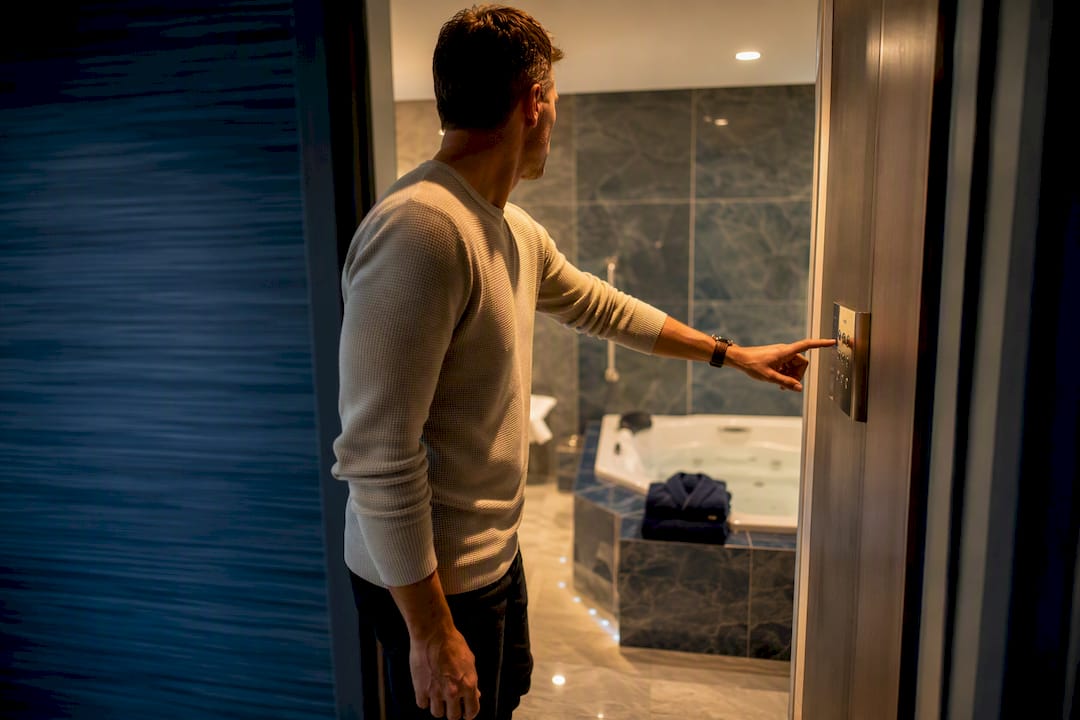
Jacuzzi is a brand name; whirlpool and jetted tub are generic terms for the category of jetted bathtubs it made famous. The practical split that matters: indoor jetted tubs fill fresh for every soak, while outdoor hot tubs and spas hold heated water continuously and need real chemical upkeep. The sections below cover the technical, cost, and buying details behind that split.
TL;DR:
- Indoor jetted tubs only require periodic flushing and minimal maintenance, whereas outdoor hot tubs need regular chemical balancing and drain-refill cycles every 3 to 6 months.
- Water jets deliver stronger, more targeted massage with higher biofilm risk, while air jets offer gentler bubbling with lower recirculation concerns.
- The typical cost for a hot tub ranges from $4,000 to $20,000 with monthly operating expenses around $30 to $80, unlike indoor tubs that cost less to operate.
- Hotel listings often use “Jacuzzi” and “whirlpool” interchangeably, so verifying the actual tub type and location before booking is essential.
- Choosing the right soaking option depends on your usage frequency, space, and maintenance willingness, not just jet type or horsepower.
Table of Contents
- Whirlpool vs. Jacuzzi: Sorting Out the Terminology
- Water Jets vs. Air Jets: What the Specs Actually Change
- Where Each One Belongs: Indoor Bathroom vs. Outdoor Spa
- What Does Each One Cost to Own?
- How to Choose Between a Jetted Tub and a Spa
- How Hotel Listings Use “Jacuzzi” and “Whirlpool”
- The Real Lesson Here: Precision Beats Assumption
- Sources
Whirlpool vs. Jacuzzi: Sorting Out the Terminology
“Jacuzzi” started as a company name, not a description. The brand traces back to an integrated hydrotherapy pump that Jacuzzi Brothers invented decades ago, and it worked so well that the name became shorthand for jetted bathing in general, the way “Kleenex” swallowed the word “tissue.”
That history explains why the terms get tangled today. Here’s how each one is actually used:
- Jacuzzi: a specific manufacturer that sells both indoor jetted tubs and outdoor spas under its own brand name.
- Whirlpool or jetted tub: any bathtub, regardless of maker, built with water or air jets, usually installed indoors and filled fresh each use.
- Hot tub or outdoor spa: a freestanding, continuously heated unit with its own filtration and chemical system, whether or not it happens to be a Jacuzzi-brand model.
A hotel listing that promises a “jacuzzi suite” might mean any of these three things, which is exactly why the distinction matters before you book or buy.
Water Jets vs. Air Jets: What the Specs Actually Change
The jet type shapes how a soak feels and how much upkeep it demands. Water jets pull tub water through internal plumbing and push it back out under pressure, giving a firmer, more targeted massage. Air jets push ambient air through small ports in the tub floor, producing a lighter, bubbling sensation with no water sitting in pipes between uses.
That plumbing difference has real consequences. Water-jet systems recirculate through pipes that can harbor biofilm if they aren’t flushed on a schedule, while air-jet tubs skip that risk almost entirely since no standing water sits in the lines.
Pump horsepower drives how firm the jets feel and how many you can run at once. A higher horsepower pump can support more jets without a noticeable pressure drop, but cramming too many jets onto an underpowered pump leaves you with a weak, unsatisfying massage. Some manufacturers now favor variable-speed or inverter pumps, which hold pressure across multiple jets without burning excess electricity.
- Water jets: stronger pressure, more plumbing, higher biofilm risk without maintenance.
- Air jets: gentler feel, simpler system, no recirculating water.
- Outdoor spas run pumps continuously to hold temperature; indoor tubs run pumps only during use.
Operating costs for a continuously heated hot tub typically run $30 to $80 per month in electricity, depending on climate and insulation, plus a separate annual chemical budget. Indoor jetted tubs carry none of that ongoing heating cost since they only draw power while filling and running the pump.
Shell material matters too. Acrylic is the most common choice for both categories, valued for holding heat and resisting stains, while fiberglass composite shells in outdoor spas tend to hold up better against year-round weather exposure than a bathroom tub ever needs to.
Where Each One Belongs: Indoor Bathroom vs. Outdoor Spa
Matching the right tub to your space and habits comes down to a few structural and lifestyle questions.
- Check subfloor support first. A built-in jetted tub filled with water can weigh several hundred pounds beyond a standard tub, so older homes sometimes need reinforcement before installation.
- Plan the outdoor pad and utilities separately. A hot tub needs a level concrete or reinforced pad, a dedicated electrical circuit, and insulation suited to your climate if winters get cold.
- Match the tub to how you’ll actually use it. A jetted tub suits an occasional therapeutic soak after a long day; a hot tub suits people who want to step outside several nights a week without filling and draining anything.
- Weigh convenience against upkeep. A ready-on-demand outdoor spa is often more practical for regular use despite the higher running cost, simply because there’s no waiting for a tub to fill.
If you soak twice a month, an indoor jetted tub covers it. If you’re chasing daily muscle recovery or a social soak with friends, the outdoor spa earns its keep.
What Does Each One Cost to Own?
Purchase price and upkeep diverge sharply between the two categories, and that gap only grows once you factor in what happens after installation day.
| Category | Typical purchase price | Monthly operating cost | Maintenance cycle |
|---|---|---|---|
| Indoor jetted tub | A few hundred to several thousand dollars | Minimal (pump runs only during use) | Monthly pipe flush recommended |
| Outdoor hot tub/spa | Roughly $4,000 to $20,000 depending on size and features | $30 to $80 for heating | Drain and refill every 3 to 6 months |
The maintenance routines aren’t interchangeable, either:
- Indoor jetted tubs need a monthly flush with hot water and dishwasher detergent, followed by a diluted bleach rinse, to keep the recirculating lines free of residue.
- Outdoor spas need weekly water testing, ongoing sanitizer dosing, and a full drain and refill roughly every 3 to 6 months.
- Annual chemical and supply costs for a hot tub commonly land between $300 and $600, a cost indoor tub owners never see.
- Pump replacement on either system typically falls somewhere in the 10 to 15 year range depending on use, though a hot tub pump running daily wears faster than one that only kicks on for occasional baths.
How to Choose Between a Jetted Tub and a Spa
Start with three honest questions: how often will you actually use it, do you have the outdoor space and electrical capacity for a spa, and are you willing to test water chemistry weekly? Your answers usually point to one category over the other before price even enters the conversation.
Once you’re talking to a dealer or reading a listing, push past the marketing language:
- Ask exactly what jet type is installed, water or air, and how many jets the pump supports.
- Ask whether access panels exist for pump and plumbing service, since some builder-grade installs skip them entirely.
- Ask about warranty length and whether replacement parts are still manufactured for that specific brand.
- For spas, ask what sanitizer system is used (chlorine, bromine, or salt) and what the drain schedule looks like.
Red flag: a listing or seller who calls anything with jets a “Jacuzzi” without naming the actual manufacturer. Getting the brand name right matters for parts and service, since a technician ordering a Jacuzzi-branded part for a different manufacturer’s tub simply won’t get a working replacement.
Pro Tip: Photograph the model plate or manufacturer sticker (usually near the access panel or motor housing) before you call for service. It saves the technician a guessing game and often saves you a second visit.
How Hotel Listings Use “Jacuzzi” and “Whirlpool”
Hotel listings are some of the worst offenders when it comes to blurring these terms. Many properties use “Jacuzzi” and “whirlpool” interchangeably regardless of what’s actually installed, which means the word in a room description tells you almost nothing about what you’ll find.
Hotelhottubs built its directory of verified in-room jacuzzi listings around solving exactly that problem, confirming amenity photos and property details rather than trusting listing copy at face value.
Before booking, run three checks yourself:
- Look for an actual photo of the tub in the room, not a stock spa image.
- Confirm with the property directly whether the tub is in-room or a shared spa amenity elsewhere in the hotel.
- Check whether the listing specifies “jetted tub” versus “private hot tub,” since that word choice often hints at indoor versus outdoor placement.
The Real Lesson Here: Precision Beats Assumption
The conventional advice treats “Jacuzzi” and “whirlpool” as interchangeable synonyms, and that’s the mistake worth correcting first. One is a company; the other is a category. Confusing the two doesn’t just muddy vocabulary, it leads homeowners to order the wrong replacement parts and leads travelers to book rooms that don’t have what they pictured.
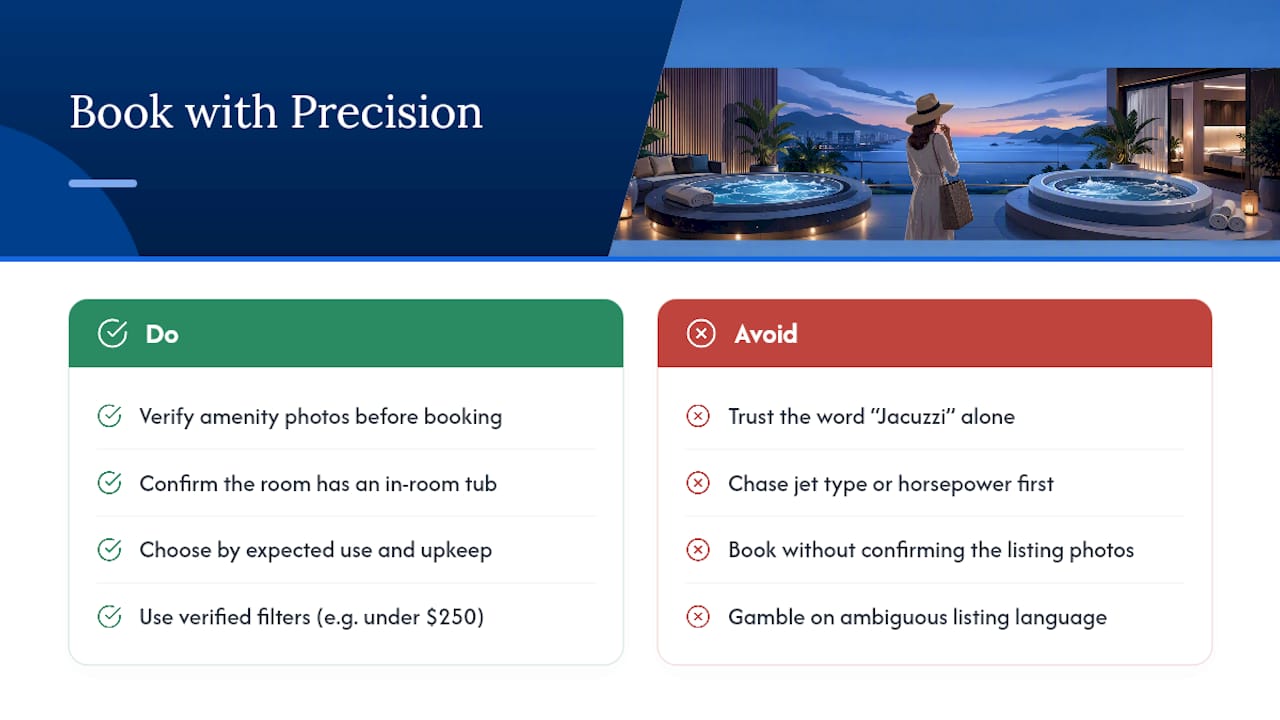
If there’s an overrated piece of advice in this space, it’s the idea that jet type or horsepower is the most important spec to chase. For most people, the deciding factor is simpler: how often will you actually use it, and how much upkeep are you honestly willing to do. A gorgeous water-jet system that sits unused because the owner dreads flushing the lines isn’t a better purchase than a modest air-jet tub that gets used every week.
For travelers, the fix is even more direct. Don’t trust the word in the listing. Verify the room has what it claims before you book, because “Jacuzzi suite” has become marketing shorthand more often than an accurate product description.
— Logan Oneal
If a private in-room soak is the whole point of your trip, don’t gamble on ambiguous listing language. Hotelhottubs verifies hotel suites with a jacuzzi in the room down to the amenity photos, and if you’re watching the budget, the under $250 category filters specifically for verified in-room tubs at lower price points. Pair the stay with a combined lodging and dining getaway for a night that’s worth planning around.
Sources
- 5 Differences Between Jacuzzis and Whirlpool Tubs - Ajax Pool & Spa, Inc.
- Jacuzzi, Jetted Tub, Whirlpool: End the Confusion in 60 Seconds - The Happy Tub