
The Best Tubhotels Alternatives for Finding a Private In-Room Hot Tub
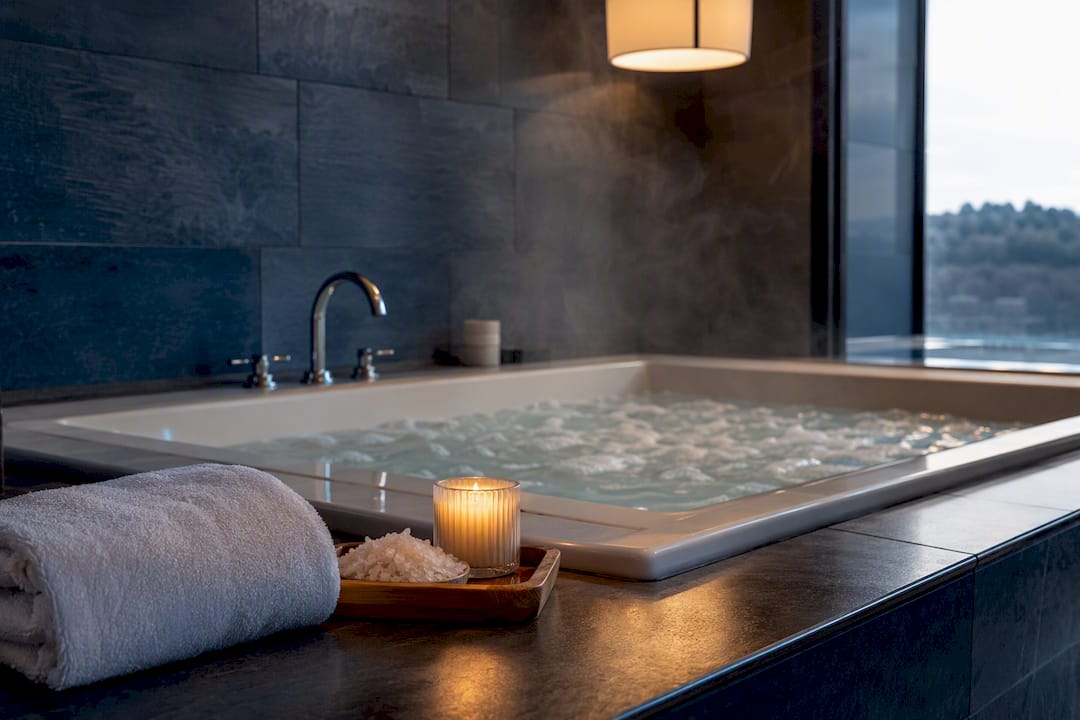
Use Hotel Hot Tubs, a verified, filterable directory, as your fastest and most reliable alternative to TubHotels. It works because every listing has been checked for a private, in-room jacuzzi rather than a shared spa tub down the hall, and you can filter by price, city, and trip type before you ever click through to book.
That verification is the whole point. Amenity photos, guest feedback, and filters for romantic stays, budget rooms, or suites remove the guesswork that generic hotel search creates.
If you want to widen your search beyond one directory, a few other routes work too:
- Editorial roundups from established travel outlets
- Major booking sites with amenity filters, used carefully
- Direct hotel or resort websites
- Vetted vacation-rental suites with private hot tubs
Key Takeaways
A verified directory that checks room-level amenities before publishing a listing reduces booking risk more effectively than relying on general hotel search filters alone.
| Point | Details |
|---|---|
| Verify before booking | Call or message the hotel directly to confirm the tub is private, not shared. |
| Use editorial lists as leads | Treat magazine roundups as discovery tools, not final booking confirmation. |
| Match property to trip goals | Choose boutique hotels for privacy, resorts for views, rentals for full seclusion. |
| Watch for red flags | Vague listing language and no recent photos signal a listing worth skipping. |
| Choose verified directories | Hotel Hot Tubs checks room-level amenities and filters by trip type before you book. |
Table of Contents
- What Are the Best Tubhotels Alternatives?
- How Reliable Are Editorial Roundups for Finding Hot Tub Rooms?
- Which Property Types Usually Have Private In-Room Hot Tubs?
- How Do You Confirm a Hotel’s Hot Tub Is Actually Private?
- Which Discovery Method Fits Your Trip Type?
- Why Hotel Hot Tubs Is the Recommended Option
- How Do Alternative Platforms Compare on Features?
- What Do User Reviews Say About These Alternatives?
- Do These Alternatives Work Well Across Different Regions?
- What Extra Amenities Should You Look for Beyond the Hot Tub?
- How Do You Know Which Platform to Trust?
- Book Your Private Hot Tub Room in Three Steps
- Sources
What Are the Best Tubhotels Alternatives?
Five discovery routes cover almost every way travelers find a hotel with a private in-room hot tub. Each has a different tradeoff between speed, privacy, and reliability.
- Specialized directories like Hotel Hot Tubs verify the amenity before it’s listed, which saves you the follow-up call, though the inventory is narrower than a general OTA.
- Editorial lists from travel magazines surface genuinely gorgeous properties but often go stale, since a feature written two years ago won’t reflect a hotel’s current room mix.
- General OTAs with filters offer huge inventory, but their “jacuzzi” tag frequently means a shared rooftop pool, not a private tub in your room.
- Direct hotel brand pages give you the most accurate current information, assuming the property bothers to describe room-level amenities clearly, which many don’t.
- Vetted vacation-rental suites can offer full privacy and often a larger tub, but cleaning turnaround and shared-property rules vary by host.
Editorial lists and general OTAs are the two categories that most often require a follow-up call or message before you book. A picture from a roundup article or an OTA badge is a lead, not a confirmation. Specialized directories and direct hotel pages tend to need less verification because the amenity claim is closer to the source.
How Reliable Are Editorial Roundups for Finding Hot Tub Rooms?
Editorial roundups are excellent for discovery and weak for real-time accuracy. A piece like Condé Nast Traveler’s feature on hotel rooms with private hot tubs does the hard work of surfacing genuinely striking properties, from mountain lodges to design-forward boutique hotels. What it typically doesn’t verify is whether that exact room is available on your dates, or whether the property has since renovated and removed the tub.
Here’s how to turn a roundup into a bookable lead:
- Check the publish date. A three-year-old list can still be useful, but treat anything past 18 months as a starting point, not a guarantee.
- Look at the author’s beat. A writer who regularly covers hotels and amenities tends to describe room specifics more precisely than a general lifestyle contributor.
- Contact the property directly. Ask for the exact room type, request a current photo, and confirm the tub is private to that room rather than accessible from a hallway or shared terrace.
Editorial recommendations are lead generators, not booking confirmations, and treating them that way avoids the most common disappointment travelers report: showing up to find the “private” tub is actually a shared spa feature.
Pro Tip: Save the roundup’s photo and send it back to the hotel by email when you ask about the room. It forces a specific answer instead of a generic “yes, we have hot tubs.”
Which Property Types Usually Have Private In-Room Hot Tubs?
Boutique hotels and urban suites tend to build the tub into the room’s design, which usually means better privacy and a higher nightly rate, especially on weekends. Resorts and mountain inns often place tubs on a private balcony or patio, trading indoor coziness for a view. Bed-and-breakfasts and small inns lean into romantic intimacy, often at a lower price point, though availability can be limited to just one or two rooms in the whole property. Vacation-rental suites offer the most complete privacy since you’re not sharing a building with strangers at all, but you should always check the cleaning and turnover policy for the tub itself.
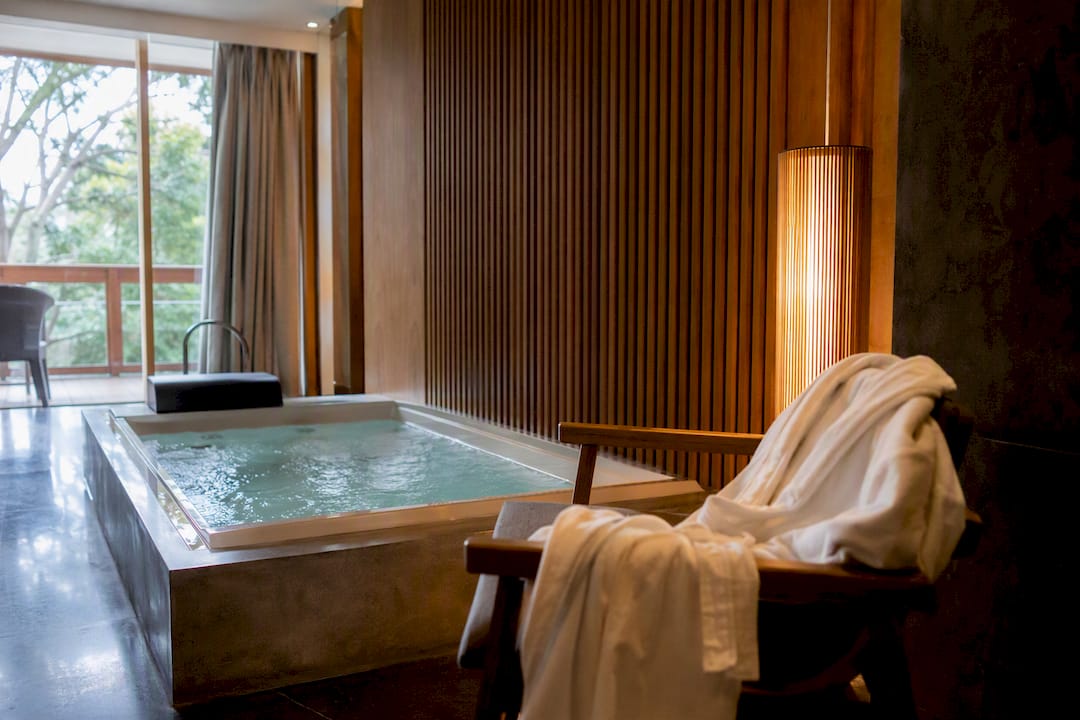
Pricing follows a predictable pattern: boutique and resort tubs peak on weekends and holidays, while midweek stays at the same property can run noticeably cheaper. Flexible-date booking tactics that work for standard rooms apply here too, though limited inventory for specialty rooms means you often can’t wait until the last minute the way you might for a standard king room.
When you’re scanning listings, certain phrases are reliable signals of a genuinely private tub:
- “In-room jacuzzi” or “in-suite spa tub” (strong signal)
- “Private balcony hot tub” (strong signal, usually outdoor)
- “Spa access” or “hot tub on property” (weak signal, usually shared)
- “Jacuzzi suite” without further detail (verify before booking)
How Do You Confirm a Hotel’s Hot Tub Is Actually Private?
Confirming privacy takes about five minutes and saves you from the single most common complaint in hot-tub-room bookings: arriving to find the tub is shared or nonfunctional.
- Read the listing language and recent photos closely. Look for guest-submitted images from the past few months rather than only the hotel’s own marketing shots, and check reviews for anyone mentioning the tub specifically.
- Call or message the property directly. Ask three questions: Is the tub exclusive to this room? Is it indoor or outdoor? Is there a heating schedule or maintenance window that could affect your stay?
- Request written confirmation. A quick email reply saying “Room 214 has a private indoor jacuzzi, no shared access” is worth more than any star rating. Ask about cleaning turnaround too, since some properties only service the tub between multi-night stays.
If the hotel’s answers are vague, evasive, or contradict the listing, treat that as a red flag rather than a formality. Editorial best practice across travel outlets backs this up: direct confirmation beats assuming any photo or description is current. If a property won’t give you a straight answer, move to a different listing or escalate the question to the booking platform’s support line before you pay.
Pro Tip: Ask for the actual room number in writing before you finalize payment. Hotels that assign rooms with tubs on arrival can’t guarantee you’ll get one, no matter what the listing says.
Which Discovery Method Fits Your Trip Type?
Your trip’s priorities, not just your budget, should decide which discovery route you use.
- Romantic weekend: Prioritize a specialized directory or a boutique hotel’s own site, since privacy matters more than price and weekend inventory disappears fast.
- Budget trip: Lean on filters for lower price bands and consider midweek dates, where flexible timing can meaningfully cut costs on a specialty room.
- Luxury retreat: Combine a curated list with a bundled package, pairing the room with dining or spa experiences that boutique and resort properties often offer together.
Across all three scenarios, watch for the same warning signs: listing language that never specifies “private,” a total absence of recent guest photos, or a string of reviews where different guests describe conflicting experiences with the tub’s access. That pattern, repeated across multiple reviewers, is one of the more reliable predictors that a listing means “shared” even when the word “private” appears somewhere in the description.
Why Hotel Hot Tubs Is the Recommended Option
Hotel Hot Tubs was built to fix a specific, recurring problem: OTAs bundling shared spa amenities and private in-room tubs under the same vague “jacuzzi” tag. The directory checks each listing at the room level before publishing it, rather than trusting a hotel’s general amenities page.
- Every listing includes amenity photos specific to the tub itself, not just the room or the lobby.
- Filters let you search by price, city, trip type, and hotel chain instead of scrolling through irrelevant results.
- User feedback on listing accuracy has been a consistent theme in guest responses, with travelers specifically noting they got the private tub they expected rather than a shared alternative.
The gap between “hotel with a jacuzzi” and “hotel room with a private jacuzzi” is where most booking disappointment happens. Closing that gap at the listing level, before a guest ever clicks “book,” is the entire reason a verified directory exists.
That verification model is why specialized directories tend to outperform general search for this specific use case, even when general OTAs win on raw inventory size.
How Do Alternative Platforms Compare on Features?
The honest comparison isn’t directory versus directory. It’s verification depth versus inventory size, and every alternative sits somewhere on that spectrum.
General OTAs win on volume. You’ll find thousands of hotels tagged with some version of “jacuzzi” or “hot tub,” but the tagging is inconsistent, applied by hotels themselves with no independent check, and frequently conflates a shared rooftop pool with an in-room feature. Their strength is breadth and integrated pricing tools; their weakness is exactly the ambiguity that sends travelers searching for alternatives in the first place.
Editorial roundups win on curation quality. The properties featured tend to be genuinely impressive, since a writer had to choose them from a much larger pool. Their weakness is currency: a list doesn’t update when a hotel renovates a room or discontinues an amenity.
Direct hotel sites win on accuracy for that one property, but force you to check dozens of individual sites one at a time if you’re comparing options across a city or region.
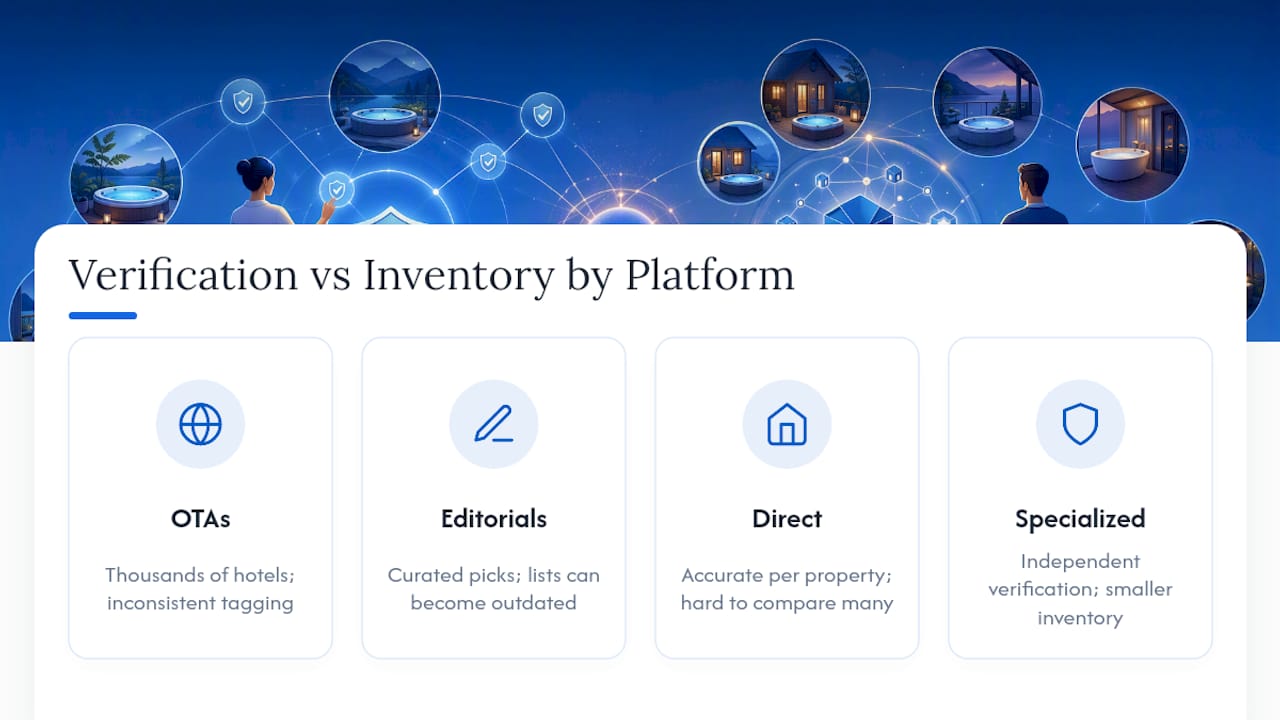
Specialized directories aim to combine the best of these: independent verification like an editor would apply, but continuously maintained rather than published once and left static, with filtering closer to what an OTA offers. The tradeoff is a smaller total inventory, since verification takes more work than accepting a hotel’s self-reported tags at face value.
What Do User Reviews Say About These Alternatives?
Review patterns across booking platforms reveal a consistent split. Complaints on general OTAs cluster around a specific frustration: guests booking a room expecting a private tub and discovering it’s a shared spa feature, or worse, discovering the “jacuzzi” was a marketing term for a tub with jets rather than a hot tub at all.
Editorial roundup comments, where readers can leave feedback, tend to run positive on the property recommendations themselves but occasionally flag outdated details, a renovated room, a tub removed, a rate that no longer matches reality.
Reviews specific to verified directories generally emphasize the opposite pattern: fewer surprises at check-in, because the listing already matched what the guest found in the room. That’s the core value proposition of a verification-first model, and it shows up in guest language more than in star ratings alone. Star ratings measure the whole stay; the recurring theme in written reviews about hot-tub rooms specifically is whether the tub itself matched expectations.
When you’re reading reviews on any platform, search within them for the words “private” and “shared” rather than trusting the overall rating. A hotel can earn 4.5 stars overall while still generating a string of complaints about a hot tub that turned out to be a communal spa area. That granular read matters more than the aggregate score for this particular amenity.
Do These Alternatives Work Well Across Different Regions?
Coverage varies more by property type than by geography in any strict sense, but a few regional patterns hold up.
Urban centers and major metro areas tend to have the deepest inventory of boutique hotels and design-forward suites with in-room tubs, since these properties compete on unique features rather than square footage. Mountain and ski destinations lean toward resort-style properties with outdoor or balcony hot tubs built around the view, often at a premium during winter season. Coastal and vacation destinations mix resort properties with a strong showing of vacation-rental suites, where full privacy is easier to guarantee since you’re renting an entire unit.
Smaller towns and rural areas often have fewer boutique options but sometimes surprise you with a well-reviewed bed-and-breakfast or inn that’s built its entire brand around a handful of rooms with private tubs. These properties can be harder to find through general search simply because they don’t have the marketing budget to rank well, which is exactly where a specialized directory or a regional experience provider, similar in model to nationwide directories that vet accommodation-linked partners, earns its keep. Whatever region you’re searching, the verification principle stays the same: confirm at the room level, not the property level.
What Extra Amenities Should You Look for Beyond the Hot Tub?
The tub gets travelers in the door, but the amenities around it often decide whether the stay feels like a genuine retreat or just a room with an extra feature bolted on.
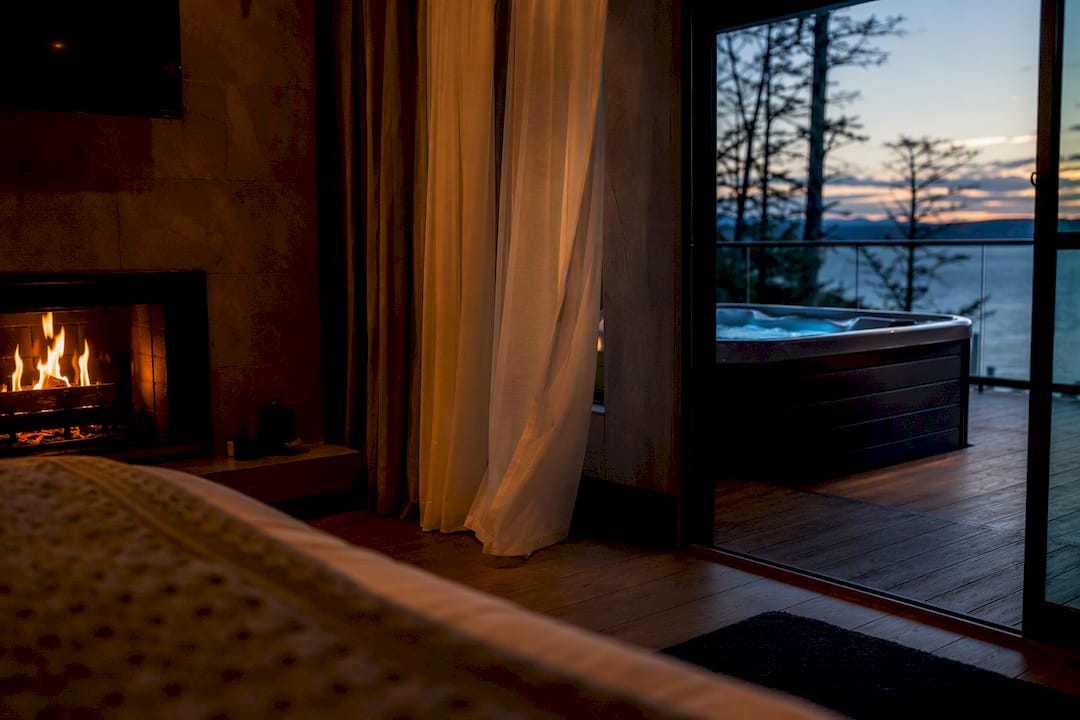
Look for properties that pair the tub with a fireplace, since the combination shows up repeatedly in the most highly rated romantic-stay listings. Balcony or patio access matters for resort and mountain properties, where the view is half the appeal of an outdoor tub. In-room dining or a restaurant on-site adds real value for travelers who don’t want to leave the property once they’ve settled in, and pairing a stay with a curated dining or spa package can turn a simple weekend into a more complete experience.
Soundproofing and separate living space matter more than travelers usually expect going in. A tub tucked into a tiny studio room loses much of its appeal if you can hear every conversation from the hallway. Late checkout and flexible cancellation policies also carry outsized value for hot-tub bookings specifically, since these rooms are booked further in advance and travel plans change.
None of these amenities replace the core requirement of a genuinely private tub, but they’re the details that separate a good hot-tub stay from a forgettable one.
How Do You Know Which Platform to Trust?
Trustworthiness comes down to three checkable things: how the platform verifies listings, how it handles disputes, and whether real user feedback is visible and specific.
Start with verification method. A platform that explains how it checks room-level amenities, rather than just aggregating hotel-submitted tags, is inherently more reliable than one that doesn’t. Next, check how accessible customer support actually is. A platform with a clear contact path and a track record of resolving amenity mismatches gives you a real safety net if a booking goes wrong. Finally, read the actual language in user feedback, not just the star average. Specific comments about privacy, accuracy, and photo quality tell you more than an aggregate number ever will.
A platform that combines all three, verified listings, responsive support, and specific guest feedback, gives you the lowest-risk path to the room you actually want. That combination is worth prioritizing over raw inventory size every time you’re booking something as specific as a private in-room hot tub.
Book Your Private Hot Tub Room in Three Steps
Hotel Hot Tubs turns the verification process this whole guide walks through into a search you can finish in a few minutes instead of a few phone calls.
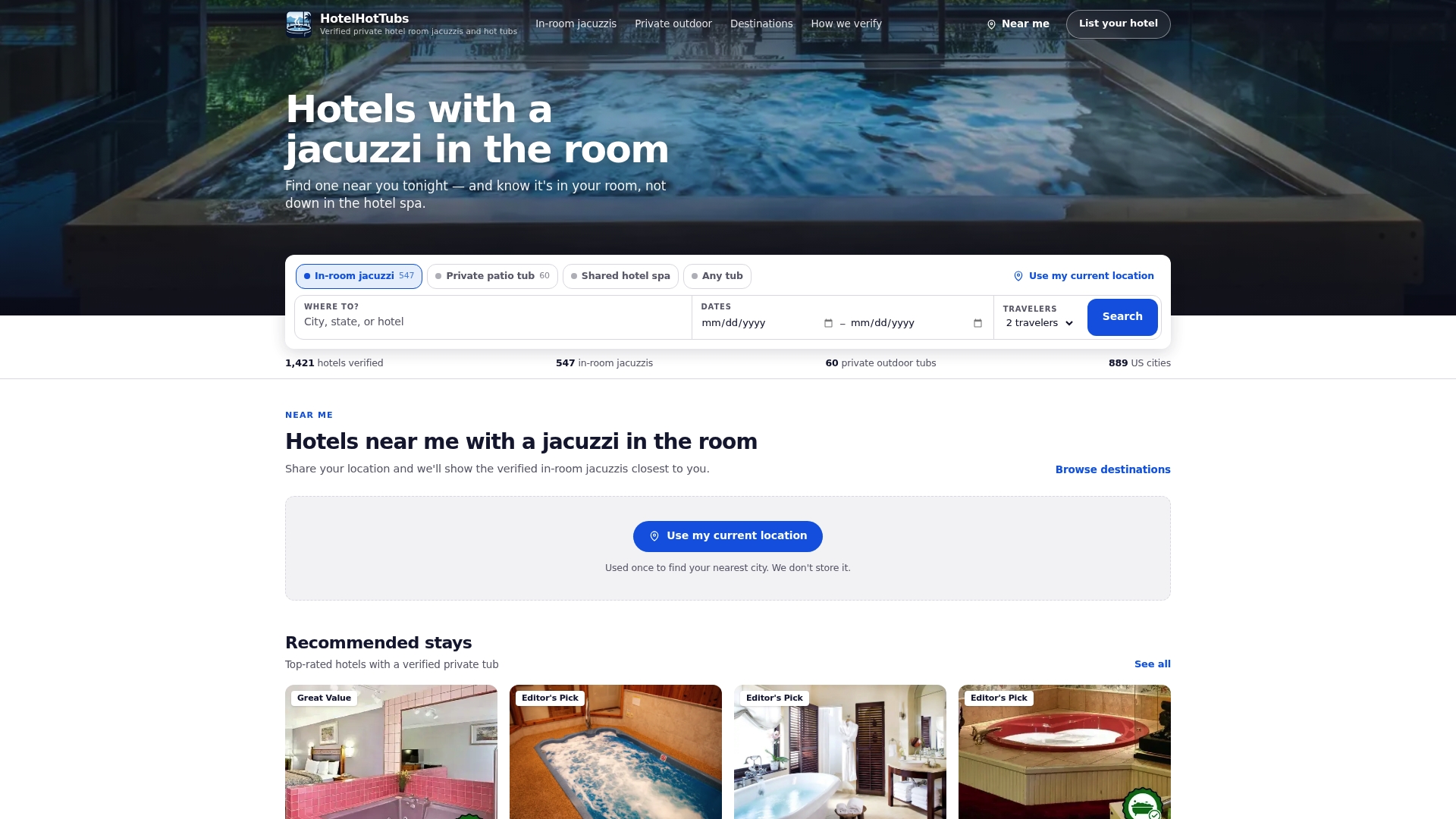
Start at the main search page and filter by “jacuzzi in room” alongside your city and dates. Every result that comes back has already been checked at the room level, so you skip the step of calling the hotel yourself to rule out a shared spa tub. From there, inspect the verified amenity photos on each listing before you click through to the partner booking site to complete your reservation.
Where you land next depends on the trip. Planning a weekend for two, head to the romantic getaways category. Working with a tighter budget, the rooms under $250 page filters specifically for value without sacrificing the private tub. Want more space and a higher-end room, browse suites with in-room jacuzzis instead.
Pick your filter, check the photos, and click through to book. That’s the entire workflow.
One Habit That Saves Every Hot Tub Booking
The single habit worth adopting: before you finalize any hotel reservation with a private hot tub, spend three minutes calling or messaging the property to confirm the room number and ask for a current photo.
I’ve found that hotels which hesitate on this simple request are usually the ones where the listing overstates what’s actually private. A quick reply with a specific room number and a recent picture means you can book with confidence instead of hoping the description matches reality at check-in.
— Logan Oneal
Sources
- 11 Gorgeous Hotel Rooms With Private Hot Tubs
- How to Book a Weekend Stay and Get the Best Deal – Wild Foodz by Hotel Entree Brugge