
Private vs Shared Hot Tub: Which One Fits Your Trip
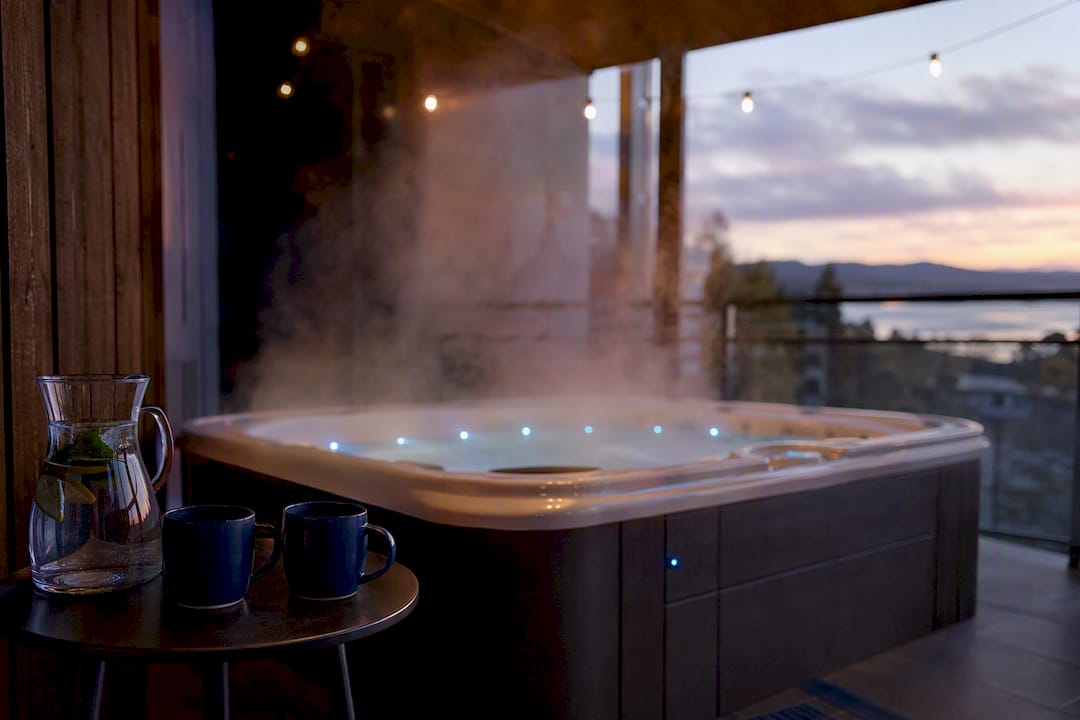
Choose a private hot tub for romance, personal hygiene control, and any-hour access. Choose a shared hot tub when you’re traveling on a budget or want a social, resort-style scene. That’s the whole decision in one sentence, but the reasons behind it matter more than the verdict.
Pick private when you want:
- Total control over cleanliness, since you’re not sharing water with strangers
- Flexible timing, including late-night or early-morning soaks without posted hours
Pick shared when you want:
- Lower cost, since the tub is usually bundled into the room rate
- A social vibe, ideal for groups or resort trips where the pool deck is part of the fun
Hotel Hot Tubs lists hotels with verified in-room jacuzzis specifically because CDC guidance on recreational water notes that fewer users touching the same water generally means lower contamination risk.
Key Takeaways
Private hot tubs offer better hygiene control and flexible access, while shared tubs offer lower cost and social value, and verifying the listing matters more than the label.
| Point | Details |
|---|---|
| Hygiene favors private | Fewer users sharing the same water reduces contamination exposure, per CDC guidance. |
| Access hours differ | Private tubs typically offer flexible access hours including late night and early morning, while shared tubs often close for scheduled maintenance. |
| Verify before booking | Check listing wording, photo context, and recent reviews to confirm a tub is truly private. |
| At-risk travelers should ask first | Pregnant guests or those with open wounds should confirm maintenance rigor before using shared tubs. |
| Hotel Hot Tubs verifies listings | Its directory filters specifically for verified in-room jacuzzis with amenity photos and guest feedback. |
This article is general information, not a substitute for advice from a qualified doctor. Consult a qualified healthcare professional about your own circumstances before acting on anything here.
Table of Contents
- Private vs Shared Hot Tub: The Real Differences That Matter
- How Do You Confirm a Hot Tub Listing Is Actually Private?
- Is It Safe to Use a Shared Hot Tub?
- What Does a Private Hot Tub Cost, and Is It Worth It?
- Why Verified Listings Matter More Than You Think
- What Serious Travelers Get Wrong About This Choice
- Book a Verified Private Hot Tub for Your Next Trip
- Sources
Private vs Shared Hot Tub: The Real Differences That Matter
The gap between these two options isn’t just about square footage. It’s about who else has been in the water, when you can use it, and how much say you have over the whole experience.
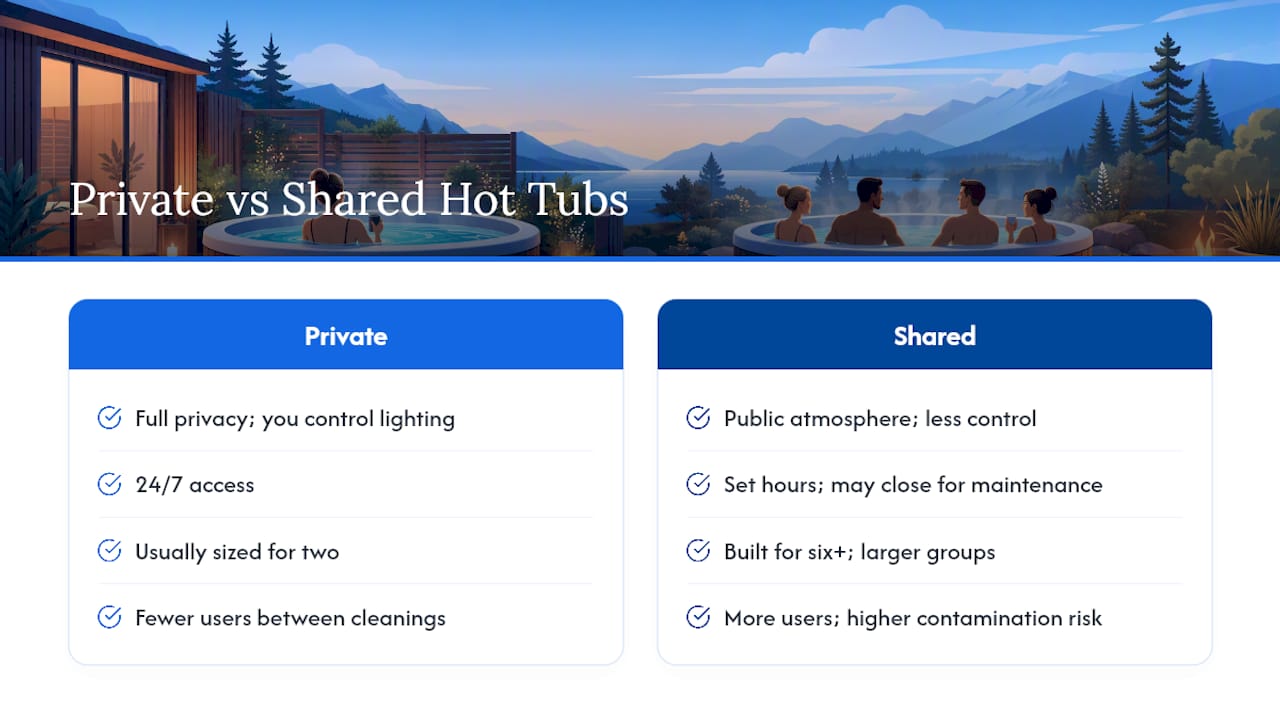
Privacy and ambiance. A private in-room tub means you set the lighting, the music, and the mood without anyone walking in. A comparison of hotel jacuzzi rooms versus public hot tubs found this control over ambiance is a top reason couples pick in-room jacuzzis over pool-deck soaking. Shared tubs, by contrast, put you in a public atmosphere. Fine for a group trip, less fine for a proposal.
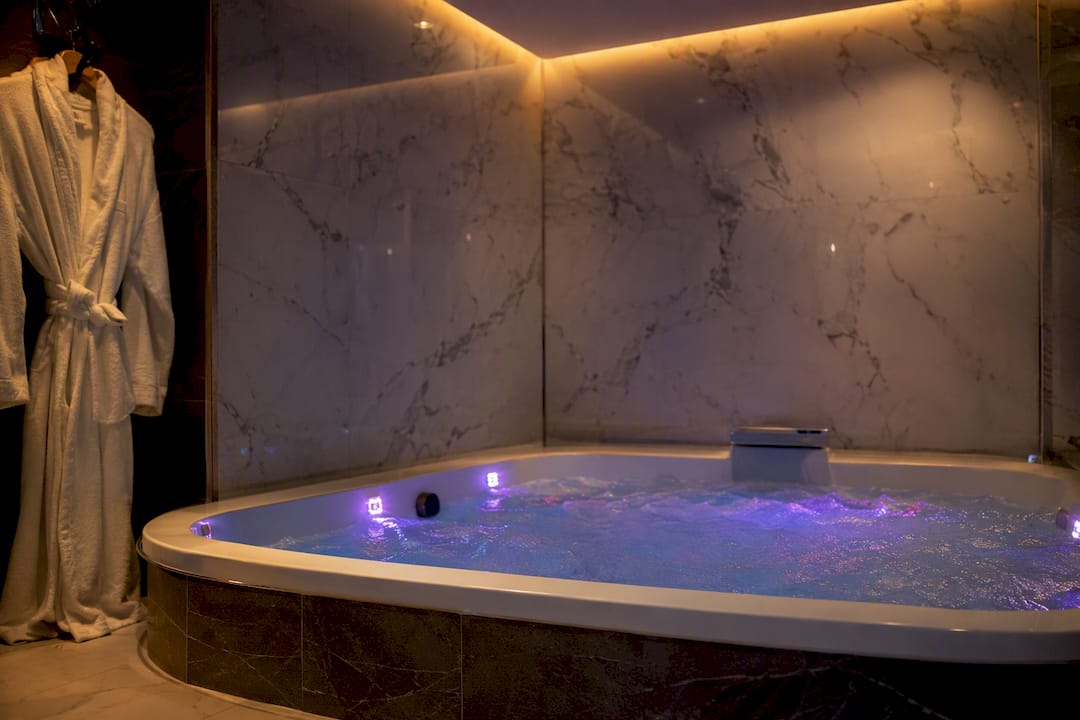
Availability and hours. Shared hot tubs at hotels and resorts often close at a set time for maintenance and liability reasons. Private in-room tubs typically offer 24/7 access, since there’s no shared schedule to manage, a detail CDC’s recreational water risk framework touches on when discussing operational controls at shared facilities.
Capacity and features. In-room tubs are usually sized for two. Shared tubs run larger, built for six or more, often with stronger jets meant for group use rather than a quiet soak.
Hygiene. This is the one that surprises people. Water in a shared tub cycles through far more bodies per day than a private unit, and the CDC’s own risk assessment flags contamination exposure as directly tied to how many different users share the same water between cleanings. That doesn’t mean shared tubs are dirty. It means the maintenance schedule behind them matters more than most travelers realize.
How Do You Confirm a Hot Tub Listing Is Actually Private?
Booking photos lie by omission more often than they lie outright. Here’s how to check before you pay.
- Read the exact wording. “In-room jacuzzi” or “private spa tub” means it’s yours. “Hot tub on-site,” “access to hot tub,” or “outdoor hot tub” almost always means shared.
- Study the photos for room context. A private tub should show the same flooring, wall color, and window style as the rest of the room. A tub photographed against tile decking, poolside umbrellas, or fencing is a shared facility, based on the visual cues that reliably distinguish in-room tubs from pool-adjacent ones, including plumbing fixtures, access doors, and decking continuity.
- Message the host or hotel directly. Ask: “Is the hot tub located inside the guest room, and is it exclusively for our use during the stay?” A vague answer is your red flag.
- Check recent reviews, not just the newest star rating. Search reviews for the words “private” or “shared” specifically. Guests almost always mention which one they got.
Pro Tip: Search booking platforms using amenity filters for “private hot tub” or “in-room jacuzzi” rather than the generic “hot tub” filter, which lumps shared and private listings together.
Is It Safe to Use a Shared Hot Tub?
Sanitation is where private and shared tubs genuinely diverge, and it’s worth taking seriously rather than shrugging off as a minor detail.
The CDC’s recreational water guidance recommends keeping water temperature around 104 to 109°F and limiting soak time to roughly 10 to 20 minutes, a range that delivers relaxation benefits while limiting strain on your cardiovascular system. That guidance applies whether you’re in a private tub or a shared one, but the stakes differ.
- Poorly maintained tubs, private or shared, can cause hot tub folliculitis, a skin infection linked to bacteria that survive in under chlorinated water.
- People who are pregnant, have low blood pressure, or have open wounds should generally avoid shared tubs altogether, according to Cleveland Clinic’s health guidance on hot tubs, since exposure to unknown users raises the risk.
- Shower before entering any hot tub, private or shared, to cut down on the bacteria and oils you bring into the water.
- Never leave children unsupervised, and treat posted capacity limits as a hard ceiling, not a suggestion.
If you fall into a higher-risk group, a private tub with a maintenance schedule you can ask about directly is the safer call.
What Does a Private Hot Tub Cost, and Is It Worth It?
Private in-room tubs usually carry a price premium over a standard room with shared amenities. That premium covers three things: exclusivity, the extra cleaning turnover between guests, and the plumbing and space a hotel dedicates to a single room.
Here’s how to think about whether that premium is worth paying:
- Pay it if privacy is the whole point of the trip, like an anniversary or a couples’ getaway where you’ll actually use the tub more than once during your stay.
- Skip it if you’re traveling with a group that wants a shared pool deck scene, or if budget matters more than solitude.
- Reduce the cost by booking off peak nights, using price filters built for budget private jacuzzi rooms, and always checking for extra cleaning or resort fees before you confirm, since common vacation rental fees can quietly inflate the advertised rate.
A shared facility bundled into your room rate remains the better value when privacy simply isn’t the priority.
Why Verified Listings Matter More Than You Think
Hotel Hot Tubs built its entire directory around one problem: too many travelers book a room expecting a private jacuzzi and get a hallway pointing toward a shared pool deck instead. Verified in-room listings with amenity photos and recent guest feedback close that gap, and Hotel Hot Tubs’ own booking data shows verification directly reduces booking mistakes for privacy focused travelers.
Two scenarios make this obvious. A couple planning a surprise anniversary weekend needs certainty, not a “hot tub on property” listing that turns out to be a shared pool deck. A solo business traveler who wants to unwind after back-to-back meetings needs the same certainty, minus the romance. Verified listings solve both.
What Serious Travelers Get Wrong About This Choice
Most guides treat this as a binary preference question, private feels fancy, shared feels social, pick your vibe. That framing undersells the actual risk variable, which is maintenance quality, not the tub type itself.
A shared hot tub on a strict cleaning schedule can be perfectly safe. A private tub that a previous guest treated poorly and housekeeping rushed through turnover on is not automatically safer just because it’s private. The conventional advice skips this nuance entirely, and it’s the single biggest gap in most booking guides.
What actually deserves your attention first is verification, not vibe. Read the listing wording carefully, check the photos for room context, and ask the host a direct question about cleaning frequency. Privacy is worth paying for, but only once you’ve confirmed the tub behind that premium is actually maintained the way the listing implies. Skip that step and you’ve just paid more for the same uncertainty.
— Logan Oneal
Book a Verified Private Hot Tub for Your Next Trip
Hotel Hot Tubs solves the exact problem this guide just walked through: listings that claim a hot tub without telling you whether it’s actually in your room or down the hall by the pool. Every listing in the directory is filtered specifically for verified in-room jacuzzis, with amenity photos and guest reviews attached so you’re not guessing.
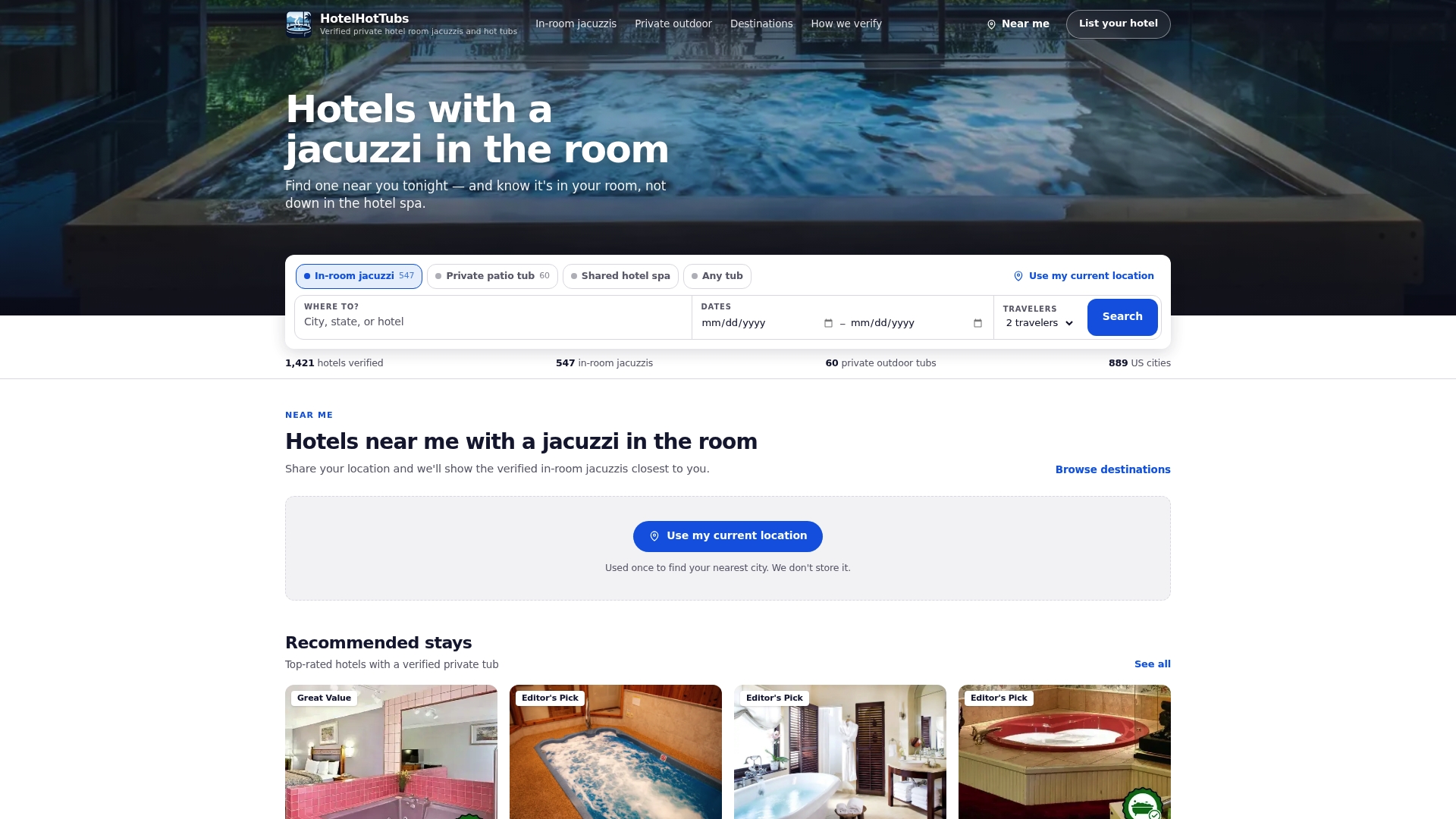
If a romantic weekend is the goal, start with the romantic hotel listings, built around couples wanting exactly the privacy this article covers. Traveling on a tighter budget? The suites search lets you filter by price and location without losing the verification standard. Before you book anything, pull up the listing photos and the three most recent reviews. That’s the fastest way to confirm the tub is what the listing claims it is.