
Book Verified Hiking Hot Tub Getaways in 5 Ideal Regions
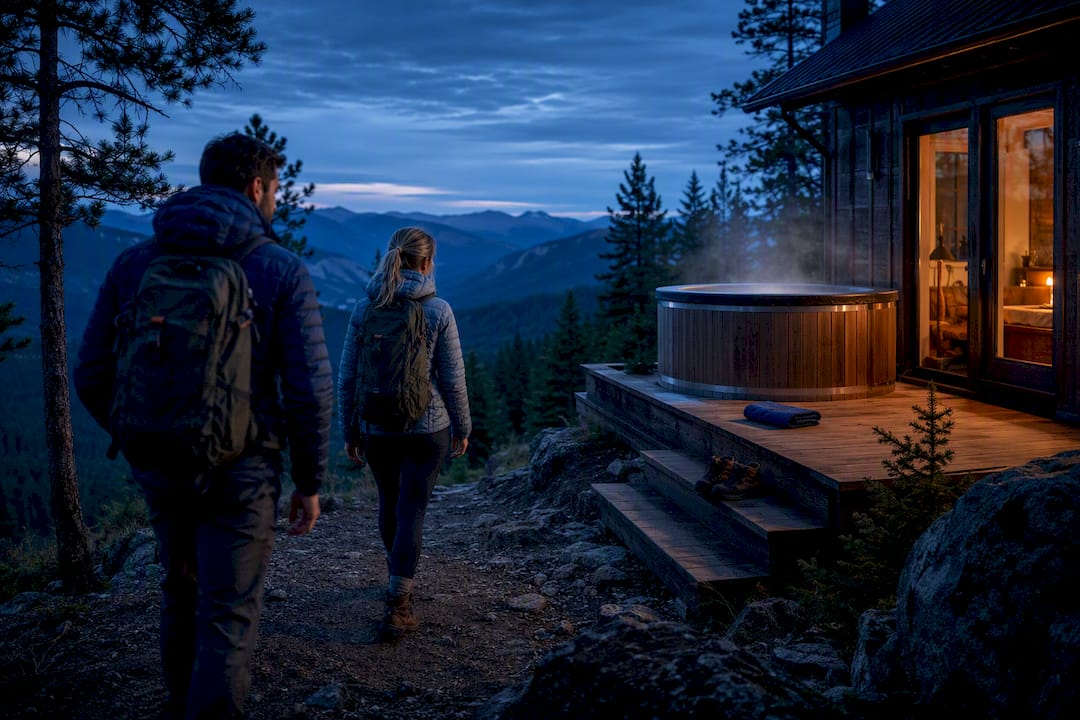
If you want trail access plus a real private soak afterward, book a verified cabin or rental that proves the hot tub is private and actually on-site, not shared or described in vague marketing language. Verification through photos and recent guest reviews is what separates a genuine private-tub retreat from a listing that quietly means “shared spa on the ground floor.” Before you book, confirm seasonal trail access too, since closures and road conditions change what’s reachable from your cabin.
TL;DR:
- Verify that the hot tub is truly private and on-site through recent photos and guest reviews, rather than relying on vague listing claims.
- Check the tub’s location, photo evidence, and guest confirmation to avoid shared or incorrectly advertised amenities before booking.
- Confirm trail access, road type, and seasonal closures to ensure your planned hike and soak are feasible within the region’s conditions.
- Allow 30 to 60 minutes for recovery and rehydration between strenuous hiking and hot tub use to prevent health risks.
- Contact hosts directly to clarify privacy, water temperature, and access details, minimizing surprises upon arrival.
Table of Contents
- What to Look for When Booking a Cabin for Hiking Hot Tub Getaways
- Which Regions Pair Great Hiking with Hot Tub Getaways?
- How Do You Plan and Pack for a Hiking-and-Soaking Trip?
- What Safety and Etiquette Rules Apply After a Hike?
- How Does Hotel Hot Tubs Verify Private Hot Tub Listings?
- Why Verification Beats Wishful Booking
- Ready to Book a Verified Hiking Hot Tub Getaway?
- Sources
- FAQ
What to Look for When Booking a Cabin for Hiking Hot Tub Getaways
The word “hot tub” in a listing title means almost nothing on its own. It could be a private cedar tub on a deck overlooking a creek, or it could be a shared jacuzzi in a lobby that six other units use on a rotating schedule. Outdoor enthusiasts planning hiking hot tub getaways need to dig past the headline and check specifics before they commit a deposit.
Start with the language itself. Listings that say “private hot tub” should back that claim with a photo showing the tub in context, ideally with the deck, cabin wall, or surrounding trees visible so you can tell it’s not a stock image borrowed from a different property. A listing that only shows a close-up of bubbling water with no surrounding context is a mild red flag. Recent reviews that specifically mention the tub, its location, and whether it was clean and functioning are worth more than five-star ratings with no detail.
Distance claims deserve the same scrutiny. “Steps from the trail” and “minutes from hiking” get used loosely. Cross-check the listed address against a mapping tool and look at actual walking or driving time, not just straight-line distance, since mountain roads rarely go in a straight line. A cabin that’s 1.2 miles from a trailhead by road might be a 20-minute drive if that road switchbacks up a ridge.
Vehicle and road access matter more for hiking-focused stays than typical vacation rentals, because these properties often sit on gravel, dirt, or seasonal roads. If a listing mentions a “4WD recommended” note or doesn’t specify road type at all, message the host directly. Remote cabins near national forest land can have driveways that turn into mud or ice depending on the month, and a rental car with low clearance is the wrong tool for that job.
Here’s a practical checklist to run through before booking:
- Tub type and placement: private outdoor deck, indoor room, or shared common area
- Photo verification: does at least one image show the tub in its actual setting, not a generic stock shot
- Review mentions: do recent guests specifically confirm the tub’s privacy and condition
- Trail distance: walking minutes versus driving minutes, checked on a map rather than taken from the listing copy
- Access road: paved, gravel, or seasonal, and whether 4WD or chains are ever needed
- Cancellation policy: especially important in shoulder seasons when weather can close trails
Direct questions to hosts save more headaches than any amount of listing research. Ask specifically: “Is the hot tub exclusively for my unit, or shared with other guests?” Ask about the water temperature range and whether the tub has jets strong enough for muscle recovery, not just a soaking pool. Ask how far the nearest maintained trailhead actually is by car, and whether the road stays open in the season you’re visiting.
Pro Tip: Screenshot the listing photos and message before you book. Hosts sometimes update listings after a renovation, and an old cached photo showing a shared tub can linger online even after they’ve built a private one. A quick “is this photo current?” message clears that up in minutes.
A directory exists to help solve this common problem for travelers seeking verified hotel stays. Every listing labels the source of verification, whether that’s a confirmed photo, a guest review excerpt, or direct host confirmation, so travelers browsing hotels with a private hot tub aren’t stuck decoding marketing language on their own.
Which Regions Pair Great Hiking with Hot Tub Getaways?
Some regions simply built their tourism infrastructure around this exact combination: hard trails by day, private soaking by night. Here’s how five of the most reliable ones stack up for outdoor enthusiasts weighing romantic hiking retreats against something more rugged.
-
The White Mountains, New Hampshire. This region rewards hikers who want real elevation gain without committing to a multi-day expedition. Loops like the Franconia Ridge Trail and the shorter Falling Waters Trail deliver alpine views and waterfall stops in a single day, and fall foliage season (typically late September through mid October) turns the whole range into a color show worth timing your trip around. Cabins tucked into the forest here often feature deck-mounted tubs positioned to catch mountain views, which makes the post-hike soak feel like an extension of the scenery rather than an afterthought.
-
Hocking Hills, Ohio. This is the low-commitment option in the group, and that’s exactly its appeal. Trails to Old Man’s Cave, Ash Cave, and Cedar Falls run short, often under two miles round trip, with dramatic waterfall and gorge scenery that punches above its mileage. Families and less experienced hikers gravitate here because the payoff-to-effort ratio is unusually high. Cabins scattered through the wooded hillsides typically pair with deck hot tubs tucked into tree cover, giving a private outdoor spa trip feel even on a modest budget.
-
Hot Springs and the Blue Ridge Mountains, North Carolina. The name isn’t marketing fluff. This stretch of the Blue Ridge combines legitimate ridge and waterfall hikes with a long regional history of natural hot springs, and lodging here leans into that identity. Properties like Windows Over Waterfalls sit on several private acres with a jetted tub positioned above a creek, framed by waterfall views, alongside private on-property trail mileage you can hike without leaving the land. Smaller operations like Hot Springs Log Cabins offer individual cabins on an eleven-acre site, each with its own tub and mountain views, which is a useful model of what to look for when comparing similar listings elsewhere.
-
The Olympic Peninsula and Mount Rainier area, Washington. This is the region for hikers who want dramatic contrast in a single trip: temperate rainforest trails, rugged coastline, and alpine terrain all within a few hours of each other. Trails through the Hoh Rainforest or around Hurricane Ridge near Port Angeles deliver a completely different feel than a New England ridge walk, and the payoff is worth the extra travel time for anyone chasing outdoor spa trips with genuine wilderness immersion. Glamping-style stays here, like the Under the Cedars setup near Olympic National Park, combine a private hot tub with short drives into Port Angeles and Sequim, giving you seclusion without total isolation from services.
-
Zion and the high desert of Utah. Desert hiking runs on a different clock than forest hiking. Trails like the Watchman or Canyon Overlook are best tackled early morning or late afternoon to avoid peak heat, and that timing actually works in your favor for tub planning, since desert evenings cool fast even after scorching afternoons. That temperature swing makes a hot soak feel earned rather than redundant. The tradeoff here is distance: many private-tub cabins sit a longer drive from the park entrance than East Coast options, so factor extra travel time into your itinerary rather than assuming a short hop like you’d get near Hocking Hills.
Each of these regions solves the hiking-plus-tub equation a little differently. The White Mountains and Zion reward hikers chasing serious mileage and views, while Hocking Hills and the Blue Ridge favor travelers who want a gentler ratio of effort to reward. If you’re weighing mountain lodge hot tub options against something coastal, the Olympic Peninsula is the rare region that lets you sample both terrains without changing hotels.
A few practical notes apply across all five regions:
- Fall and early spring tend to have the fewest trail crowds but the most unpredictable weather.
- Mountain and desert regions both see meaningful temperature swings between day and night, so pack layers regardless of season.
- Always check current trailhead status before you drive out, since seasonal closures and maintenance windows shift year to year.
How Do You Plan and Pack for a Hiking-and-Soaking Trip?
The timing between your hike and your soak matters more than most travelers expect. Jumping straight from a strenuous descent into a 104°F tub spikes your heart rate right when your body is trying to recover, so give yourself a buffer of 30 to 60 minutes after a hard hike before you get in. Use that window to rehydrate, change out of sweaty layers, and eat something with actual calories in it. A typical day might look like an early trailhead start around 7 or 8 a.m., a finish by early afternoon, a couple of hours to relax and eat, then a soak in the early evening once your body has settled.
Packing for this kind of trip means thinking about two very different activities that happen hours apart. A short, focused list beats an overstuffed bag:
- A microfiber towel that dries fast and doesn’t take up much room
- Flip-flops or slide sandals for the walk from cabin to tub
- Quick-dry base layers for the hike, plus a spare set for the return trip
- Extra socks (wet socks on a long drive home are miserable)
- Electrolyte packets or tablets, especially for hikes over five miles or in dry climates
- A couple of zip-top bags to isolate wet or muddy clothes from the rest of your gear
- A small waterproof headlamp for early starts or late returns on unlit trails
Seasonal prep changes the packing list slightly. Cold-weather trips need insulated layers for the hike and a warm robe or jacket for the walk back from the tub, since stepping out of 100°F water into 30°F air is a shock your packing list should anticipate. If you’re driving into mountain terrain in winter, check whether your rental or personal vehicle needs chains, and confirm ground clearance is adequate for the access road, since some cabin driveways aren’t plowed the same day as the highway.
Pro Tip: Message your host a day or two before arrival to confirm tub access hours and ask about the cleaning schedule. Some properties drain and refill on a set rotation, and you don’t want to arrive expecting a soak only to find the tub mid-cycle. A quick note also confirms whether the water controls are guest-adjustable or fixed by the host, which matters if you’re particular about temperature after a long day outside.
For couples road-tripping specifically for this combination, a jacuzzi getaway packing checklist built around verified stays can save you from packing guesswork on top of trail planning.
What Safety and Etiquette Rules Apply After a Hike?
Soaking right after a hard hike carries real physiological tradeoffs, and most guides skip the details. Rehydrate before you get in, not just after. Dehydration from sweating on trail plus the heat of a hot tub is a combination that can trigger lightheadedness, and it’s one of the more common reasons hikers cut a soak short.
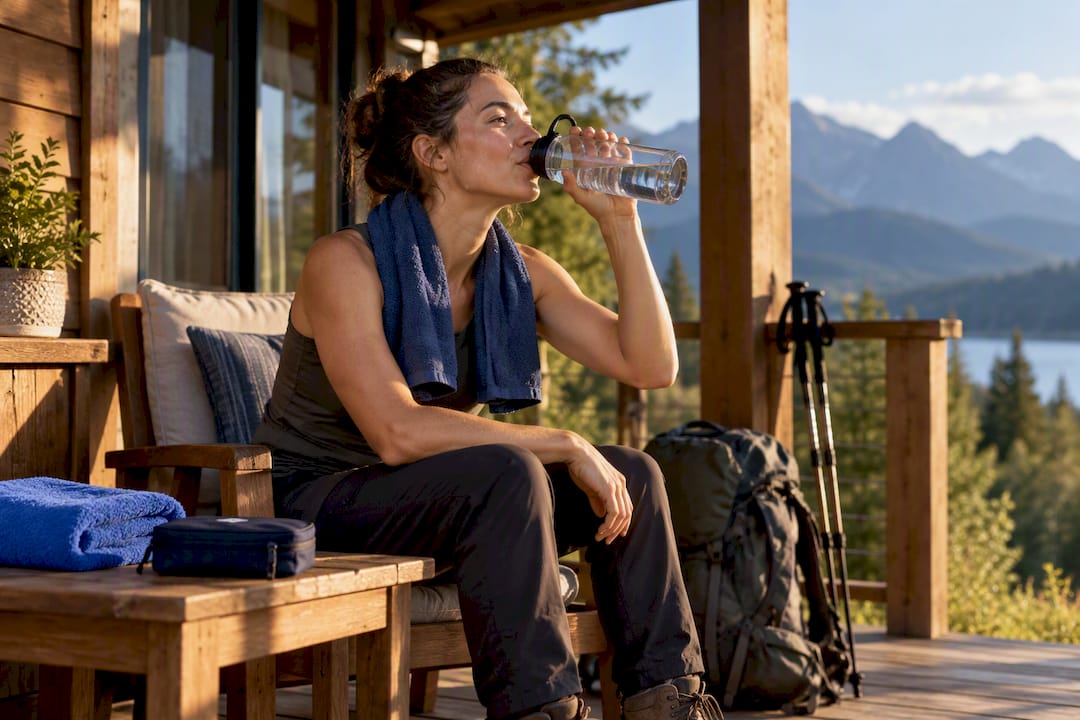
Skin matters too. Fresh blisters, scrapes, or any open wound should stay out of hot tub water, covered and disinfected instead, since warm water full of other people’s bacteria (even in a private tub that isn’t perfectly filtered) is not where a cut should heal. If you’re prone to blisters on longer hikes, pack basic first-aid supplies and treat anything before you soak, not after.
Alcohol and heat don’t mix well, and this pairing gets overlooked constantly on hiking hot tub getaways where a celebratory drink feels earned. Heavy drinking combined with a long soak raises the risk of dizziness and can mask early signs of overheating, so keep it light if you’re planning more than a quick dip.
Etiquette extends beyond your own body. Quiet hours matter more at remote cabins than at hotels, since noise carries further in wooded or mountain settings and neighbors are often just as isolated as you are. The USDA Forest Service’s Leave No Trace guidance covers responsible behavior on public trails near these properties, and the same principles about minimizing noise and impact apply to your evening at the cabin.
A few habits keep both your body and your host relationship intact:
- Rehydrate before soaking, not just after your hike
- Cover and disinfect any open wounds before getting in
- Go easy on alcohol if you’re soaking for more than 15 to 20 minutes
- Keep noise and outdoor lighting low after dark, especially in shared or wooded settings
- Ask hosts directly about filtration and cleaning schedules if the tub’s condition isn’t obvious from photos
If you have specific health concerns about hot tub use, especially with cardiovascular conditions, a quick check with a doctor before your trip is worth the five minutes it takes.
How Does Hotel Hot Tubs Verify Private Hot Tub Listings?
Generic hotel and rental sites describe amenities in broad strokes: “hot tub” might mean a shared jacuzzi suite, an in-room whirlpool, or a private outdoor tub, and the listing copy rarely tells you which. Hotelhottubs built its directory specifically to close that gap. Every listing is labeled with its source of verification, whether that comes from a confirmed photo showing the tub in its actual setting, a guest review that explicitly mentions the tub’s location and condition, or direct confirmation from the property itself.
That labeling matters because it removes the guesswork travelers usually have to do on their own. Instead of cross-referencing five review sites and hoping the photos are current, a traveler can see at a glance whether a listing’s “private hot tub” claim is backed by evidence or just a headline.
A hot tub listed as private should be provable as private. Photo evidence, dated reviews, and a clear label on how a claim was verified turn a vague amenity line into something a traveler can actually trust before they book.
Author Logan Oneal covers travel logistics and lodging verification for Hotelhottubs, focusing on how listing transparency affects real booking outcomes for travelers planning active, outdoor-focused trips. The gap between a listing that says “private hot tub” and one that proves it tends to show up exactly when it’s least convenient: after check-in, when there’s no fixing it.
A few things worth checking on any verified listing:
- Whether the tub’s location (in-room, on a private deck, or in a shared area) is explicitly stated, not implied
- Whether at least one photo shows the tub in real context rather than a generic stock image
- Whether recent reviews independently confirm the same details the listing claims
Why Verification Beats Wishful Booking
Booking a hiking trip built around a private soak only works if the soak actually happens the way you pictured it. I’ve seen enough vague listing language to know the pattern: “hot tub on property” can mean anything from a private cedar tub on your own deck to a shared jacuzzi three units are fighting over on a Saturday night. Verification isn’t a nice extra. It’s the difference between the trip you planned and the one you actually get.
The habit worth building isn’t complicated. Message the host before you book, not after. Ask where the tub sits, who has access, and whether recent guests mentioned it by name in their reviews. On the trail side, give your body 30 to 60 minutes between a hard descent and a long soak, and treat that gap as part of the plan rather than wasted time.
Privacy and clarity in a listing aren’t luxuries reserved for expensive stays. They’re the baseline every hiking hot tub getaway should meet, and they cost nothing extra to ask for before you hand over a deposit.
— Logan Oneal
Ready to Book a Verified Hiking Hot Tub Getaway?
A specific directory addresses this problem by labeling how each hot tub claim is verified, by photo, review, or direct confirmation.
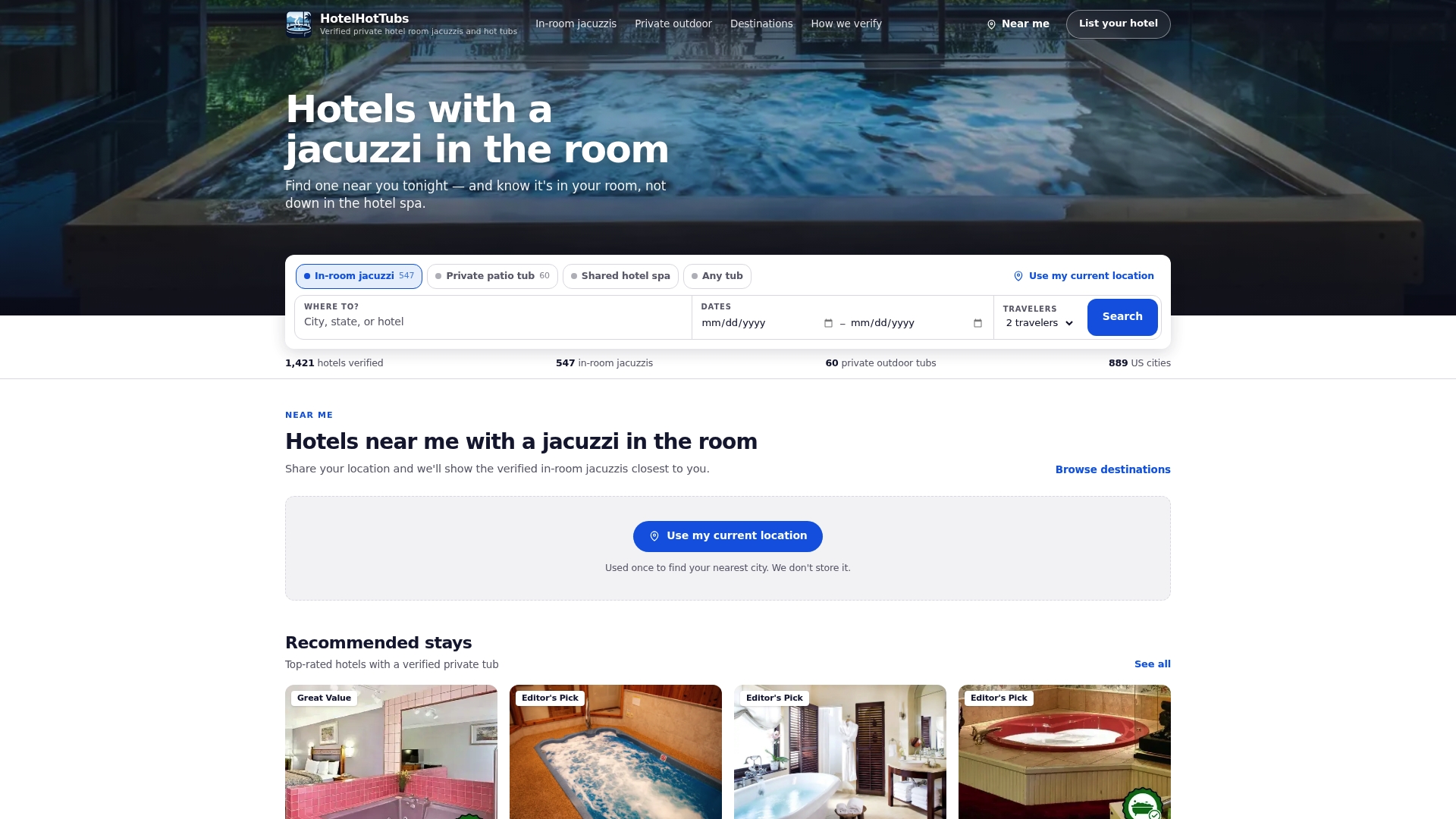
Start by filtering for hotels with a private hot tub if you want an outdoor soak after a day on the trail, or browse romantic hotels with a jacuzzi in the room if you’re planning a couples trip built around both hiking and relaxation. Mountain-adjacent stays like the verified listings in Mountain Village, Colorado show how this filtering works in a real alpine destination. Book early if you’re traveling during fall foliage or peak summer weekends, since verified private-tub inventory in popular hiking regions moves fast, and message the property directly about trail distance and access before you commit. A few minutes of checking now beats an unpleasant surprise at check-in.
Sources
Trail conditions and access rules change by season, so check official sources before you finalize a trip. The USDA Forest Service’s trail use and access guidance covers permits and seasonal restrictions relevant to many of the regions above, while their trail maintenance and seasonal access documentation explains how closures can shift trailhead availability year to year. For general guidance on evaluating a self-catering rental beyond the hot tub question, this guide to choosing holiday homes covers useful ground on logistics and expectations. Always check the specific national forest or park page for the trailhead you’re planning to use before you travel.
- Under the Cedars - Glamping experience w/Hot Tub — Hipcamp
- Windows Over Waterfalls — cabin with hot tub in North Carolina (property page)
FAQ
What Makes a Hot Tub Listing “Verified”?
A verified listing backs its private-tub claim with evidence, typically a photo showing the tub in its actual setting or a guest review that specifically confirms its location and condition. Hotelhottubs labels each listing’s source of verification directly, so travelers can see whether a claim comes from a photo, a review, or host confirmation before booking.
How Long Should I Wait Between Hiking and Soaking?
Give yourself 30 to 60 minutes after a strenuous hike before getting into a hot tub, using that time to rehydrate and cool down. Jumping straight from a hard descent into hot water puts extra strain on a heart rate that’s already elevated from exertion.
Are Private Hot Tubs Available Near National Forest Trailheads?
Yes, many cabins and rentals near regions like the White Mountains, Hocking Hills, and the Blue Ridge Mountains advertise private tubs within a short drive of trailheads. Always confirm current trail access through USDA Forest Service guidance before finalizing travel dates, since seasonal closures can affect specific trails.
Is It Safe to Soak in a Hot Tub After Drinking Alcohol?
Combining heavy drinking with a long hot tub soak raises the risk of dizziness and can mask early signs of overheating. Keep alcohol light if you plan to soak for more than 15 to 20 minutes after a hike.
Does Hotelhottubs Cover Cabins or Only Hotels?
Hotelhottubs focuses on hotels with verified in-room or private hot tubs, including categories like private outdoor hot tubs and whirlpool suites. Pricing for specific listings is available directly on the site, since rates vary by property and location.